Sanakirja
Tekoälykääntäjä

Kuvat
4

Vaihtoehtoiset kirjoitusmuodot
Synonyymit

| Kieli | Käännökset |
|---|---|
| esperanto | dividsigno, obeluso |
| italia | obelo |
Määritelmät
Substantiivi
- (historical) A symbol resembling a horizontal line (–), sometimes together with one or two dots (for example, ⨪ or ÷), which was used in ancient manuscripts and texts to mark a word or passage as doubtful or spurious, or redundant; an obelisk.
- A dagger symbol (†), which is used in printed matter as a reference mark to refer the reader to a footnote, marginal note, etc.; beside a person's name to indicate that the person is deceased; or beside a date to indicate that it is a person's death date; an obelisk.
Taivutusmuodot
| Monikko | obeli |
| Monikko | obeluses |
Luokat
(historical) A symbol resembling a horizontal line (–), sometimes together with one or two dots (for example, ⨪ or ÷), which was used in ancient manuscripts and texts to mark a word or passage as doubtful or spurious, or redundant; an obelisk.
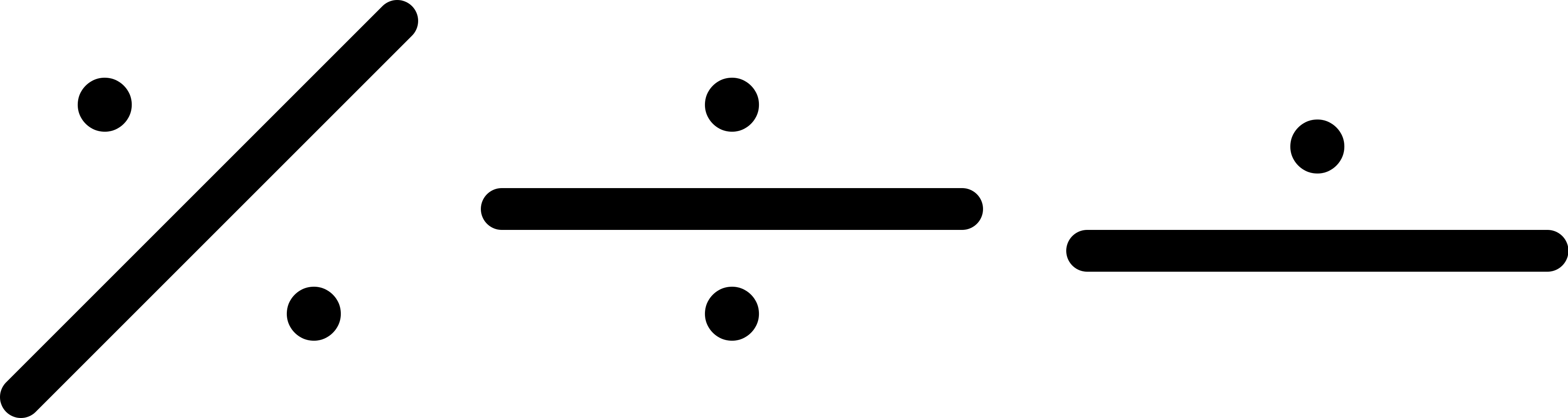
Three variants of obelus glyphs
A dagger symbol (†), which is used in printed matter as a reference mark to refer the reader to a footnote, marginal note, etc.; beside a person's name to indicate that the person is deceased; or beside a date to indicate that it is a person's death date; an obelisk.

Dagger and double-dagger symbols in a variety of fonts, showing the differences between stylized and non-stylized characters. Fonts from left to right: DejaVu Sans, Times New Roman, LTC Remington Typewriter, Garamond, and Old English Text MT
A dagger symbol (†), which is used in printed matter as a reference mark to refer the reader to a footnote, marginal note, etc.; beside a person's name to indicate that the person is deceased; or beside a date to indicate that it is a person's death date; an obelisk.

A variant with three handles