Sanakirja
Tekoälykääntäjä

Kuvat
6

Vaihtoehtoiset kirjoitusmuodot
Synonyymit

| Kieli | Käännökset |
|---|---|
| espanja | hombre de guerra, buque de guerra |
| italia | nave da guerra |
| japani | 戦艦 (senkan), 軍艦 (gunkan) |
| portugali | guerreiro, navio de guerra |
| ranska | homme de guerre, navire de guerre |
| saksa | Kriegsschiff |
| suomi | sotalaiva |
| venäjä | вое́нный (vojénnyi), военнослу́жащий (vojennoslúžaštši), вое́нный кора́бль (vojénnyi korábl) |
Määritelmät
Substantiivi
- (military, archaic, except, humorous) A man whose occupation is fighting in wars; a soldier, a warrior.
- (military, nautical, chiefly historical) A powerful armed naval vessel, primarily one armed with cannon and propelled by sails; a warship.
- (obsolete, rare) In full man-of-war's-man: a sailor serving on board an armed naval vessel.
- Senses relating to animals.
- Ellipsis of man-of-war bird or man-of-war hawk (“any of a number of seabirds, especially one which attacks other seabirds to take their food”).
- (specifically, archaic) A frigatebird (family Fregatidae), especially the magnificent frigatebird (Fregata magnificens).
- (specifically, US) The Arctic skua (Stercorarius parasiticus).
- Ellipsis of Portuguese man-of-war (“Physalia physalis, a jellyfish-like marine cnidarian consisting of a floating colony of hydrozoans attached to a float”).
Taivutusmuodot
| Monikko | men-of-war |
(military, nautical, chiefly historical) A powerful armed naval vessel, primarily one armed with cannon and propelled by sails; a warship.

Thomas Bastion and I. Cole, The Royal Sovereign, a First Rate Man of War, Carrying 100 Guns and 750 Men (1715). According to the National Maritime Museum in Greenwich, London, U.K., this is a hand-coloured print depicting the H.M.S. Royal George, a man-of-war originally called the H.M.S. ''Royal Charles'' when built in 1673.
(specifically, archaic) A frigatebird (family Fregatidae), especially the magnificent frigatebird (Fregata magnificens).

A magnificent frigatebird (Fregata magnificens), also called a man-of-war , on Isla Contoy, Quintana Roo, Mexico.
(specifically, US) The Arctic skua (Stercorarius parasiticus).

An Arctic skua (Stercorarius parasiticus) in Svalbard, known as a man-of-war in the United States.
Ellipsis of Portuguese man-of-war (“Physalia physalis, a jellyfish-like marine cnidarian consisting of a floating colony of hydrozoans attached to a float”).
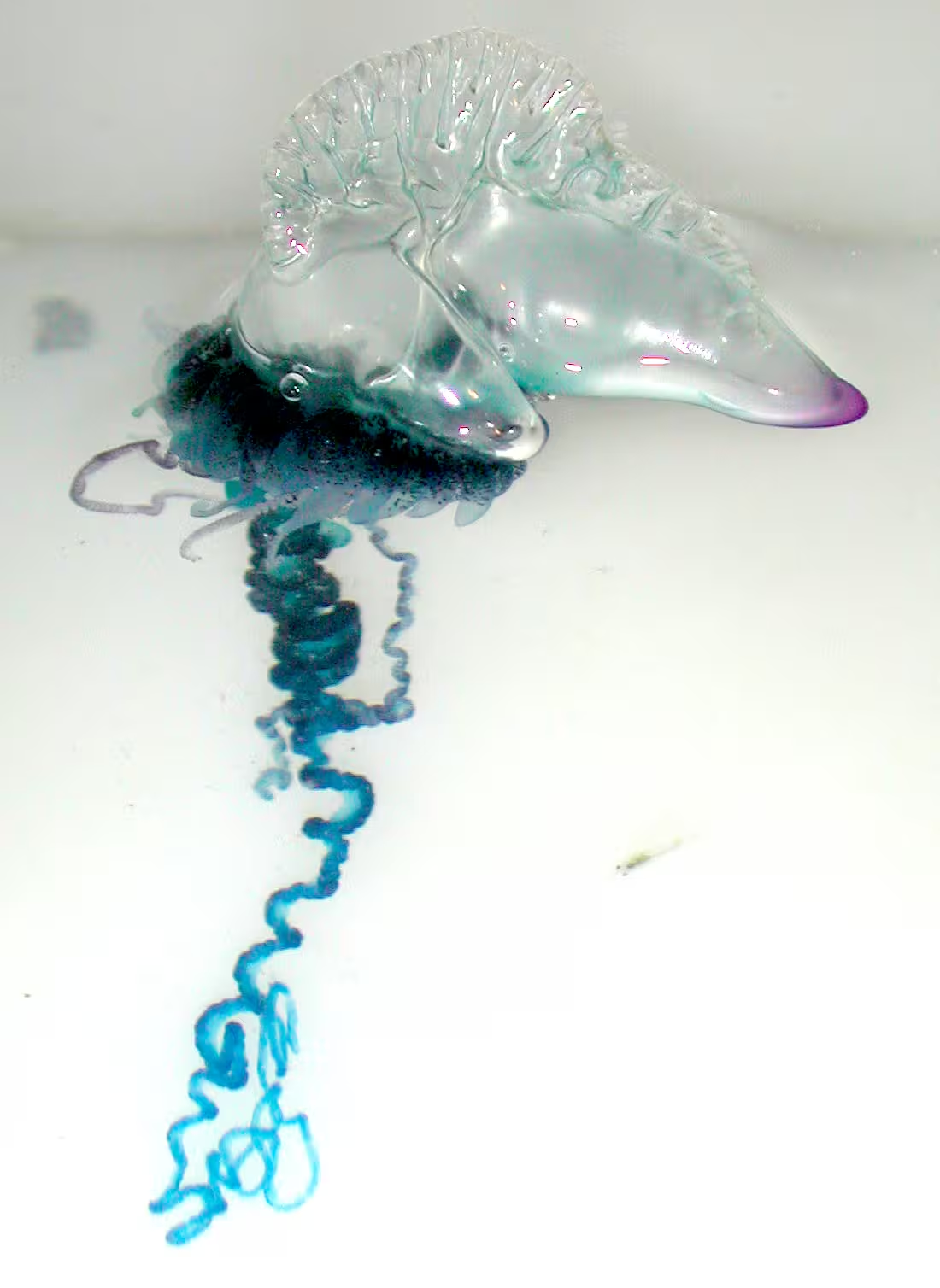
A man-of-war , known more fully as a Portuguese man-of-war (Physalia physalis).