Sanakirja
Tekoälykääntäjä

Kuvat
27

Vaihtoehtoiset kirjoitusmuodot
Määritelmät
Substantiivi
- An adult who accompanies or supervises one or more young, unmarried men or women during social occasions, usually with the specific intent of preventing some types of social or sexual interactions or illegal behavior.
- A type of hood, often ornamental or official, with an attached cape and a tail, later worn as a hat with the face hole put over the top of the head instead.
- A device placed on the foreheads of horses which draw the hearse in pompous funerals.
Verbi
Esimerkit
- His head and face covered with a chaperon, out of which there are but two holes to look through.
Taivutusmuodot
| Partisiipin perfekti | chaperoned |
| Imperfekti | chaperoned |
| Partisiipin preesens | chaperoning |
| Monikko | chaperons |
| Yksikön kolmannen persoonan indikatiivin preesens | chaperons |
An adult who accompanies or supervises one or more young, unmarried men or women during social occasions, usually with the specific intent of preventing some types of social or sexual interactions or illegal behavior.

Mrs. Chambers (chaperone), Bonnie Mealing, Clare Dennis, Frances Bult, Eileen Wearne, Thelma Kench (N.Z. sprinter) at the 1932 Summer Olympics in Los Angeles, California, USA
A type of hood, often ornamental or official, with an attached cape and a tail, later worn as a hat with the face hole put over the top of the head instead.
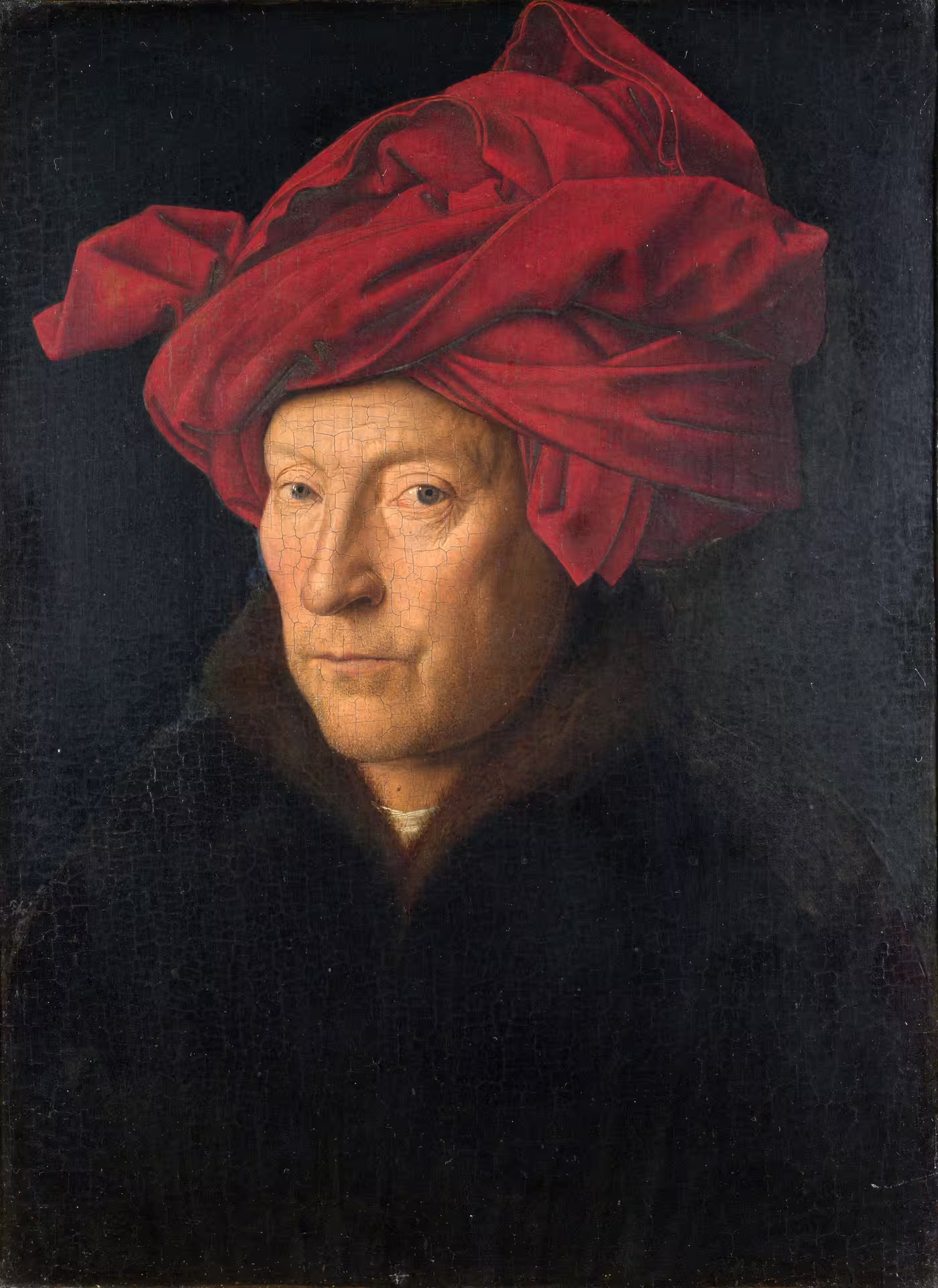
Probable self-portrait by Jan van Eyck, 1433, National Gallery. The chaperon is worn in style A with just a patch of the bourrelet showing (right of centre) through the cornette wound round it (practical for painting in).
A type of hood, often ornamental or official, with an attached cape and a tail, later worn as a hat with the face hole put over the top of the head instead.

The original form of chaperon, worn with the hood pulled back off the head. Many were shorter than this example. Morgan Bible, mid 13th century.