Sanakirja
Tekoälykääntäjä

Kuvat
12

Synonyymit
Ääntäminen
 Southern England:
- IPA: /dɪsəˈbɪlɪti/
| Kieli | Käännökset |
|---|---|
| bulgaria | недъгавост, неправоспособност |
| espanja | discapacidad, incapacidad, minusvalía, impotencia |
| italia | invalidità, disabilità, inabilità |
| japani | 身体障害 (しんたいしょうがい, shintai shōgai), 不自由 |
| portugali | incapacidade, inabilidade |
| puola | niepełnosprawność |
| ranska | handicap, infirmité, invalidité, pension d'invalidité |
| ruotsi | funktionsnedsättning, handikapp |
| saksa | Behinderung |
| suomi | vamma, kyvyttömyys, vammaisuus, työkyvyttömyys, invaliditeetti |
| turkki | sakatlık |
| tšekki | postižení |
| venäjä | нетрудоспособность (netrudosposobnost), инвалидность (invalidnost), неправоспособность (nepravosposobnost) |
Määritelmät
Substantiivi
- (countable, medical model of disability) A condition characterised by a significant limitation in a person's physical or intellectual powers or ability.
- (uncountable) The state of having such a condition; the state of being disabled.
- (countable, social model of disability) A limitation in function (the things that a person can do or achieve) that is driven by any combination of their impairments (the medical facts about them) and the imperfect state of society's inaccessibility that sometimes fails to accommodate their needs.
- (countable, obsolete) An inability.
- (countable, law) A lack of legal qualification to do something; legal incapacity or incompetency.
- (uncountable, informal) Regular payments received by a disabled person, usually from the state.
Esimerkit
- Grossest faults, or disabilities to perform what was covenanted.
- Chatham refused to see him, pleading his disability.
- The disabilities of idiocy, infancy, and coverture.
- I had to go on disability after the accident.
- Did you get your disability this month?
Taivutusmuodot
| Monikko | disabilities |
(countable, medical model of disability) A condition characterised by a significant limitation in a person's physical or intellectual powers or ability.

pictograms used by the United States National Park Service. A package containing all NPS symbols is available at the Open Icon Library
(uncountable) The state of having such a condition; the state of being disabled.
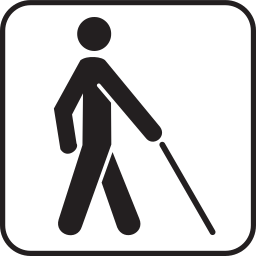
pictograms used by the United States National Park Service. A package containing all NPS symbols is available at the Open Icon Library
(countable, social model of disability) A limitation in function (the things that a person can do or achieve) that is driven by any combination of their impairments (the medical facts about them) and the imperfect state of society's inaccessibility that sometimes fails to accommodate their needs.

A 28-year-old Iraqi woman who lost both of her legs during the Iraq War in 2005