Sanakirja
Tekoälykääntäjä



| Kieli | Käännökset |
|---|---|
| espanja | doblaje |
| italia | doppiaggio, doppiatura |
| japani | 吹き替え (fukikae), ダビング (dabingu) |
| kreikka | μεταγλώττιση (metaglóttisi / metaglōttízō) |
| portugali | dublagem |
| puola | dubbing |
| ranska | doublage, postsynchronisation |
| ruotsi | dubbning |
| saksa | Synchronisation |
| suomi | jälkiäänitys, dubbaus, kooste, päälleäänitys, päällekkäiskoostaminen, päällekkäiskooste |
| venäjä | дубли́рование (dublírovanije), дубля́ж (dubljáž), переза́пись (perezápis), дубляж (dubljaž) |
- Dubbing on sanan dub partisiipin preesens.
Määritelmät
Substantiivi
- The conferral of knighthood; investment with a title.
- (film) The replacement of a voice part in a film or animation, particularly with a translation, revoicing.
- (film) The process in which additional or supplementary recordings are "mixed" with original production sound to create the finished soundtrack.
- (music) The transfer of recorded music from one medium to another.
Esimerkit
- New genres are thus emerging as a consequence of foreign text dubbings (and subtitlings). Some original cartoons and films are also based on dubbings of foreign cartoons and films.
Taivutusmuodot
| Monikko | dubbings |
Luokat

(film) The replacement of a voice part in a film or animation, particularly with a translation, revoicing.
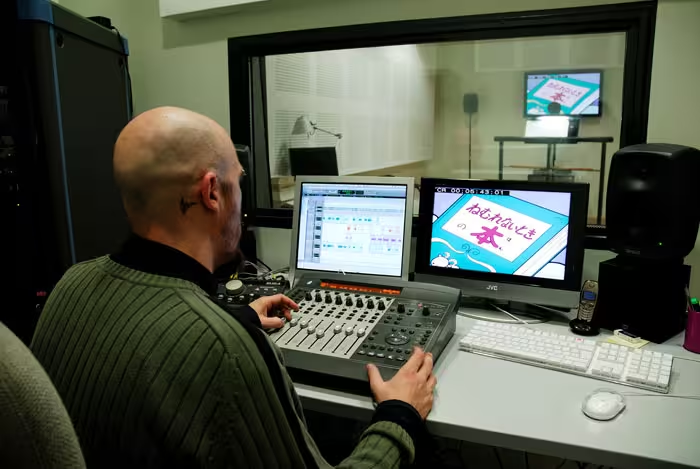
Dubbing studio
(film) The process in which additional or supplementary recordings are "mixed" with original production sound to create the finished soundtrack.
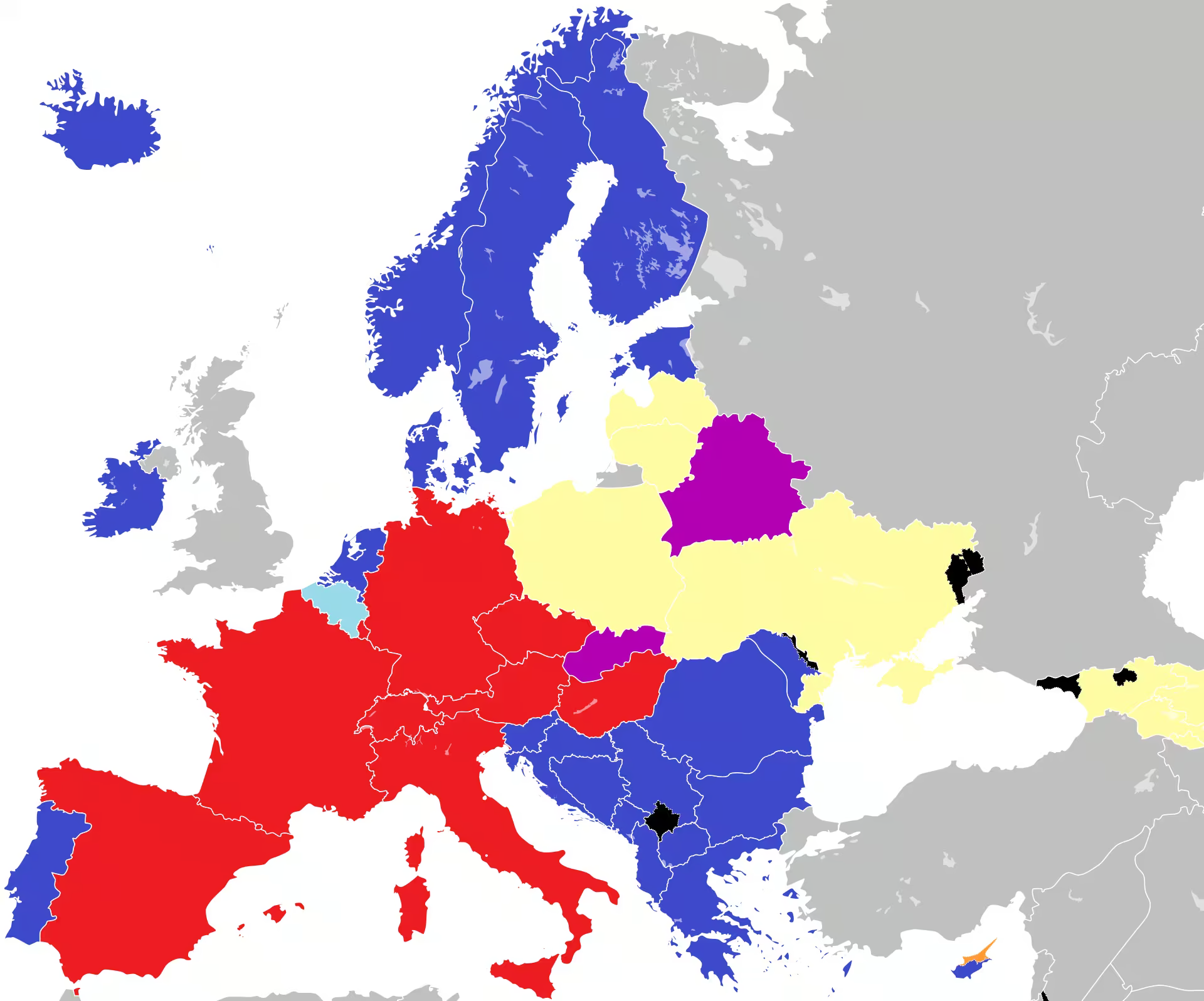
Countries using dubs only for children's media, and subtitles otherwise. Mixed areas: Countries primarily using subtitles but occasionally full-cast dubs instead. Voice-over: Countries using usually one or just a couple of voice actors while the original soundtrack persists. General dubbing: Countries using full-cast dubs. Belgium: The Dutch-speaking region primarily uses subtitles, but sometimes imports dubs from the Netherlands or produces their own dialect dubs for children's films. The French-speaking region uses full-cast dubs for all films. Slovakia and Belarus: Countries with a separate official language that occasionally produce their own dubs, but generally use dubs from other countries, since their languages share a high degree of mutual intelligibility.
