Sanakirja
Tekoälykääntäjä

Kuvat
4

Ääntäminen
 US
US
| Kieli | Käännökset |
|---|---|
| espanja | poliandria |
| italia | poliandria |
| japani | 一妻多夫制 (issai-tafu), ポリアンドリー (poriandorī) |
| kreikka | πολύανδρος (polýandros / políandros) |
| portugali | poliandria |
| puola | poliandria |
| ranska | polyandrie |
| saksa | Polyandrie, Vielmännerei |
| suomi | monimiehisyys, polyandria |
| tšekki | mnohomužství, polyandrie |
| venäjä | многомужество (mnogomužestvo), полиандрия (poliandrija) |
| viro | polüandria, mitmemehepidamine |
Määritelmät
Substantiivi
- The having of a plurality of husbands at the same time; usually, the marriage of a woman to more than one man, or the practice of having several husbands, at the same time.
- (zoology) The mating pattern whereby a female copulates with plural males.
- Sexual relations with multiple males, by a female or a male, human or non-human, within or without marriage.
- (botany) The condition of having many stamens.
Taivutusmuodot
| Monikko | polyandries |
Luokat
The having of a plurality of husbands at the same time; usually, the marriage of a woman to more than one man, or the practice of having several husbands, at the same time.
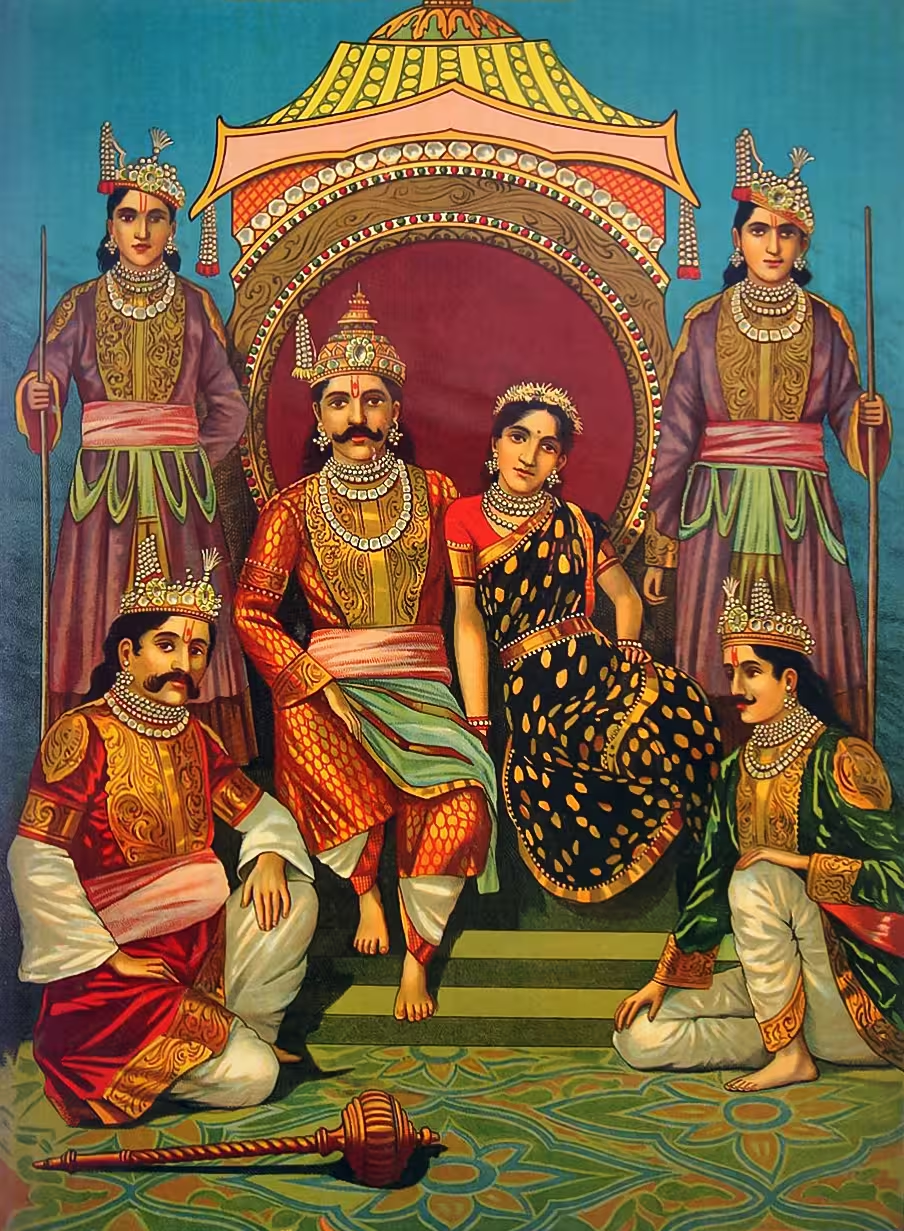
Draupadi and her five brother husbands, the Pandavas. Top down, from left to right: the twins Nakula and Sahadeva stand either side of the throne on which Yudhishthira and Draupadi sit between Bhima and Arjuna.
The having of a plurality of husbands at the same time; usually, the marriage of a woman to more than one man, or the practice of having several husbands, at the same time.

Polyandry
The having of a plurality of husbands at the same time; usually, the marriage of a woman to more than one man, or the practice of having several husbands, at the same time.
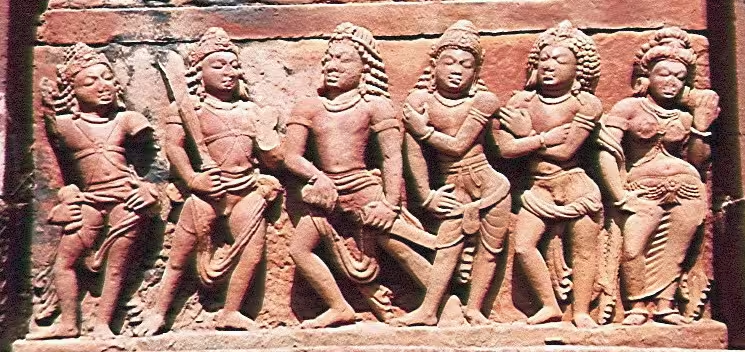
Draupadi with her five husbands – the Pandavas. The central figure is Yudhishthira; the two to his left are Bhima and Arjuna. Nakula and Sahadeva, the twins, are to his right. Their wife, at far right, is Draupadi. Deogarh, Dashavatara Hindu Temple.