Sanakirja
Tekoälykääntäjä


Ääntäminen
 US
US- Tuntematon aksentti:
- IPA: /həˈmɒləɡəs/
| Kieli | Käännökset |
|---|---|
| espanja | homólogo |
| italia | omologo, omologico |
| kreikka | ομόλογος (omólogos) |
| portugali | homólogo |
| ranska | homologue |
| saksa | homolog |
| suomi | samankaltainen, homologinen |
| tšekki | homologní |
Määritelmät
Adjektiivi
- Showing a degree of correspondence or similarity.
- (mathematics) In corresponding proportion.
- (biology) Corresponding to a similar structure in another life form with a common evolutionary origin.
- (chemistry) Belonging to a series of aliphatic organic compounds that differ only by the addition of a CH₂ group.
- (genetics) Having the same morphology as another chromosome or locus; relating to a homologue.
- (cultural anthropology, structural anthropology) Playing the same role as seen in another culture, whether by historical connection, psychological archetype, convergent cultural evolution, or otherwise (as may be hypothesized but not known with certainty by current science), as for example with the cryptozoologic concepts of yeti and sasquatch, the use of polite and familiar pronouns, or other similarities.
Taivutusmuodot
| Komparatiivi | more homologous |
| Superlatiivi | most homologous |
Luokat

(biology) Corresponding to a similar structure in another life form with a common evolutionary origin.
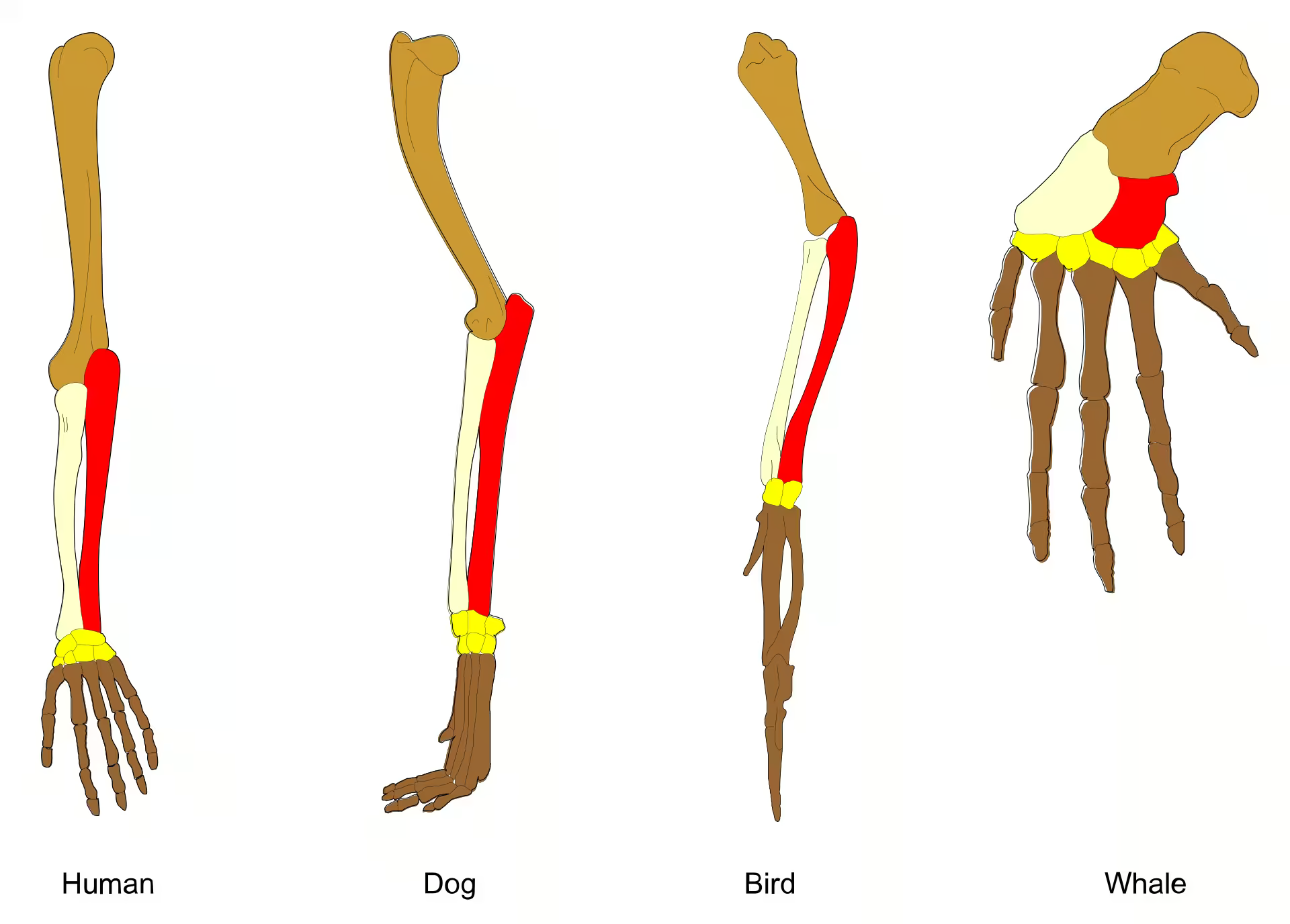
The principle of homology: The biological relationships (shown by colours) of the bones in the forelimbs of vertebrates were used by Charles Darwin as an argument in favor of evolution.