Sanakirja
Tekoälykääntäjä


| Kieli | Käännökset |
|---|---|
| puola | ryzosfera |
| ranska | rhizosphère |
| saksa | Rhizosphäre |
| suomi | juurta ympäröivä maakerros mikrobeineen |
| tanska | rhizosfære |
| tšekki | rhizosféra |
| venäjä | ризосфе́ра (rizosféra) |
Määritelmät
Substantiivi
- (soil science) The soil region subject to the influence of plant roots and their associated microorganisms.
Taivutusmuodot
| Monikko | rhizospheres |
Luokat
(soil science) The soil region subject to the influence of plant roots and their associated microorganisms.
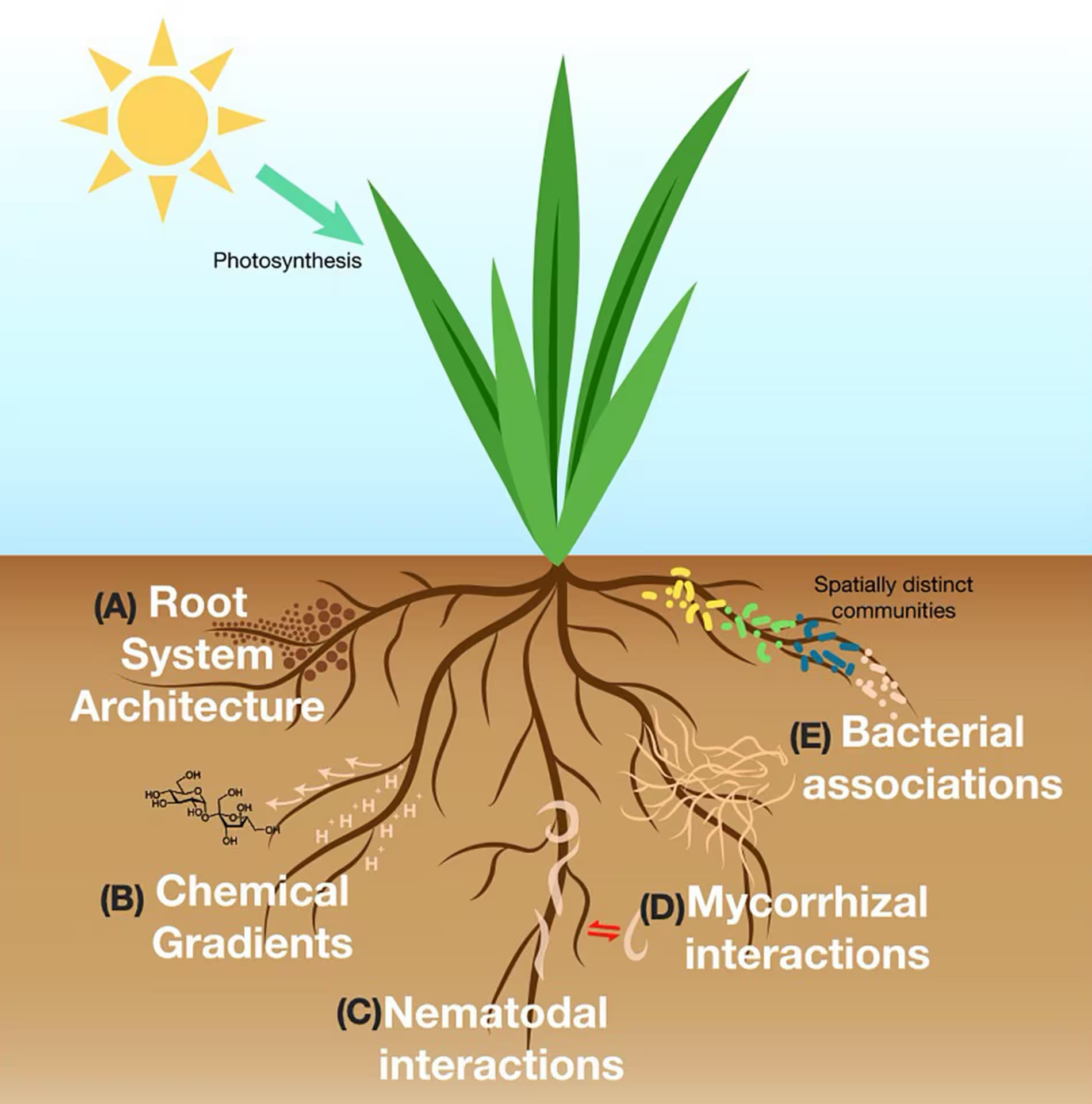
Some rhizosphere processes in the soil (A) Root system architecture is concerned with structural features of the root and responds to with environmental stimuli. (B) The rhizosphere produces photosynthetically fixed carbon that exudes into the soil and influences soil physicochemical gradients. (C) Free-living or parasitic nematodes interact with the rhizosphere via signaling interactions. (D) Mycorrhizal fungi create intimate relationships with the roots and engage in nutrient exchange. (E) Bacterial composition is distinct upon different parts, age, type of the roots.
(soil science) The soil region subject to the influence of plant roots and their associated microorganisms.

Sunlight and carbon dioxide from the atmosphere are absorbed by the leaves in the plant and converted to fixed carbon. This carbon travels down into the plant's roots, where some travels back up to the leaves. The fixed carbon traveling to the root is radiated outward into the surrounding soil, where microbes use it as food for growth. In return, microbes attach to the plant root, which improves the root's access to nutrients and its resistance to environmental stress and pathogens. In specific plant/root symbiotic relationships, the plant root secretes flavonoids into the soil, which is sensed by microbes, which release nod factors to the plant root, which promotes the infection of the plant root. These unique microbes carry out nitrogen fixation in root nodules, which supplies nutrients to the plant.
(soil science) The soil region subject to the influence of plant roots and their associated microorganisms.

Predicted effects of elevated carbon dioxide on soil carbon reserves In the short term, plant growth is stimulated by elevated carbon dioxide, resulting in increased rhizodeposition, priming microbes to mineralize soil organic carbon (SOC) and adding CO2 to the atmosphere through respiration. But the net impact on greenhouse gas emissions will be reduced by the increased uptake of CO2 from the atmosphere by increased plant growth. However, over the long term, soil reserves of easily decomposed carbon will be depleted by the increase in microbial activity, resulting in increased catabolism of SOC reservoirs, thus increasing atmospheric CO2 concentrations beyond what is taken up by plants. This is predicted to be a particular problem in thawing permafrost that contains large reserves of SOC that are becoming increasingly susceptible to microbial degradation as the permafrost thaws.