Sanakirja
Tekoälykääntäjä

Kuvat
7

Synonyymit

Määritelmät
Substantiivi
- Usually preceded by the: a state of apathy or lack of interest; a situation where one feels boredom, ennui, or tedium; a state of listlessness or malaise.
- (obsolete) Plural of doldrum
- (nautical) Usually preceded by the: the state of a sailing ship when it is impeded by calms or light, baffling winds, and is unable to make progress.
- (nautical, oceanography, by extension) Usually preceded by the: a part of the ocean near the equator where calms, squalls, and light, baffling winds are common.
Esimerkit
- I was in the doldrums yesterday and just didn't feel inspired.
- How immigrants rescued Germany from doldrums. (Independent)
- He is in the doldrums.
(nautical, oceanography, by extension) Usually preceded by the: a part of the ocean near the equator where calms, squalls, and light, baffling winds are common.

The ITCZ is visible as a band of clouds encircling Earth near the Equator.
(nautical, oceanography, by extension) Usually preceded by the: a part of the ocean near the equator where calms, squalls, and light, baffling winds are common.
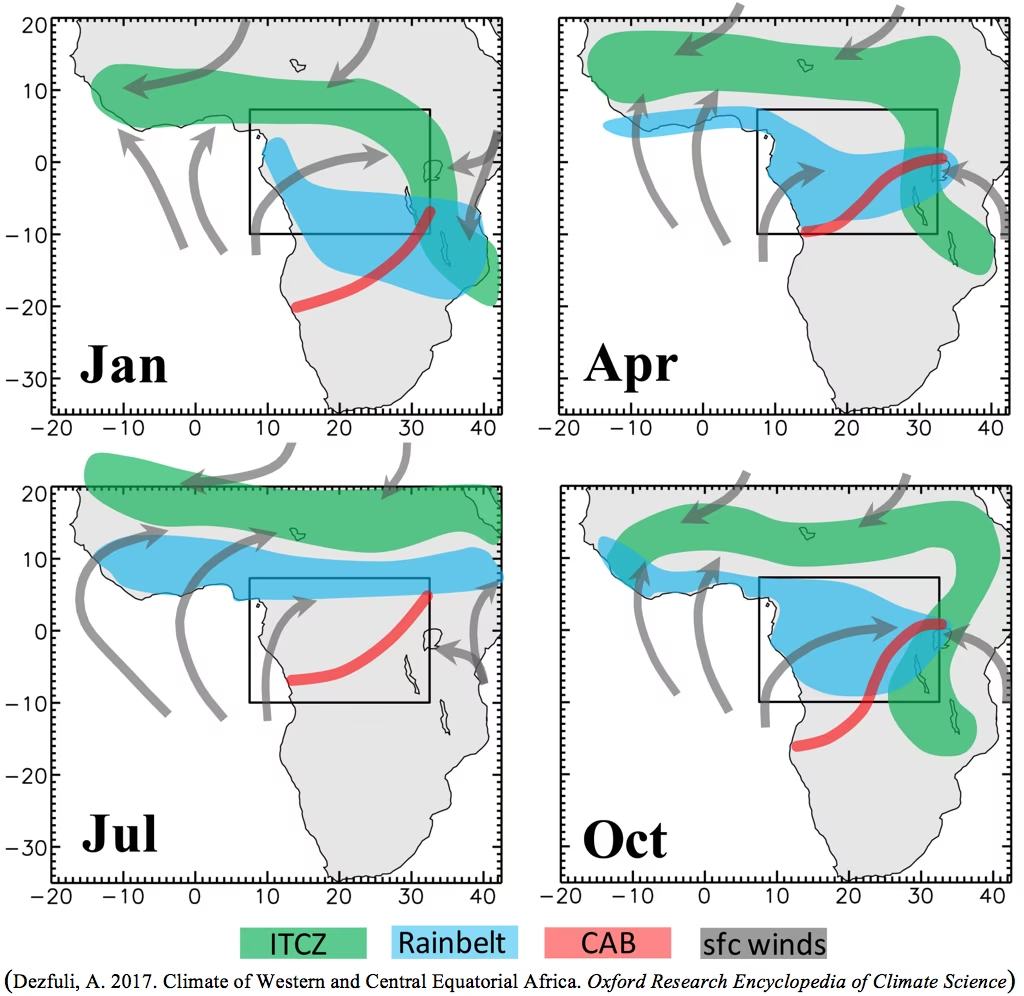
Seasonal variability of the Intertropical Convergence Zone (ITCZ), Congo air boundary (CAB), tropical rainbelt, and surface winds over Africa (adapted from Dezfuli 2017 with modification). This schematic shows that the ITCZ and the region of maximum rainfall can be decoupled over the continents.
(nautical, oceanography, by extension) Usually preceded by the: a part of the ocean near the equator where calms, squalls, and light, baffling winds are common.

Vertical air velocity at 500 hPa, July average. Ascent (negative values) is concentrated close to the solar equator; descent (positive values) is more diffuse