Sanakirja
Tekoälykääntäjä


Synonyymit

Lyhenteet
| Kieli | Käännökset |
|---|---|
| espanja | compilador |
| esperanto | tradukilo |
| italia | compilatore, compilatrice, accoglitore, redattore, redattrice |
| japani | コンパイラ (konpaira / kompaira) |
| kreikka | μεταγλωττιστής (metaglottistís), συντάκτης (syntáktis), συντάκτρια (syntáktria) |
| latina | compīlātor |
| portugali | compilador |
| puola | kompilator |
| ranska | compilateur, compilatrice, transcodeur |
| ruotsi | kompilator |
| saksa | Übersetzer, Kompiler, Compiler, Kompilator |
| suomi | kokoaja, kääntäjä, laatija, käännin |
| turkki | derleyici |
| tšekki | překladač, kompilátor |
| unkari | fordító, fordítóprogram |
| venäjä | компиля́тор (kompiljátor), составитель (sostavitel) |
| viro | kompilaator |
Määritelmät
Substantiivi
- One who compiles.
- (software) A computer program that transforms source code into object code.
Esimerkit
- a compiler of poetry anthologies
- my favourite crossword compiler
Taivutusmuodot
| Monikko | compilers |
Luokat
(software) A computer program that transforms source code into object code.
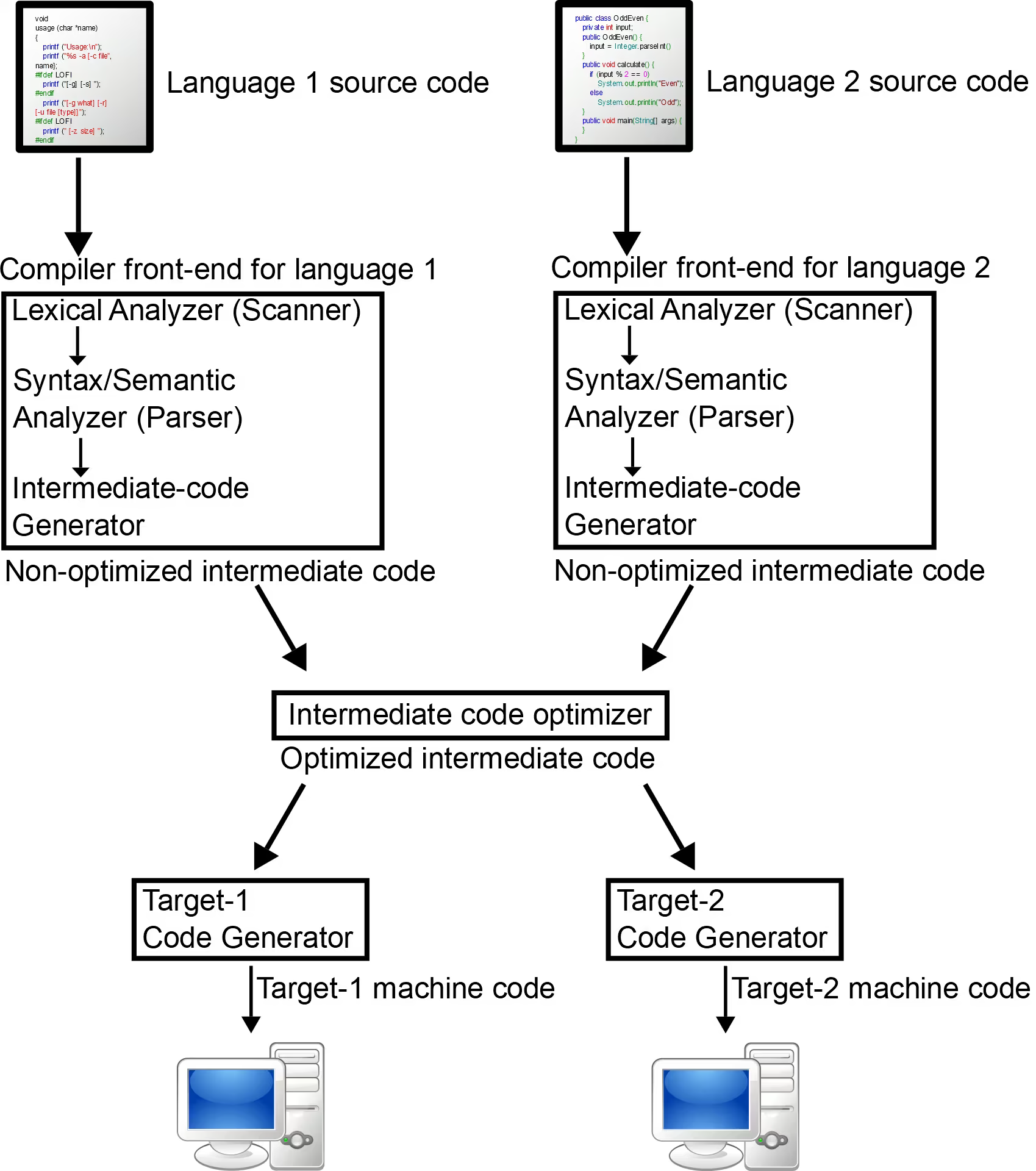
A diagram of the operation of a typical multi-language, multi-target compiler

(software) A computer program that transforms source code into object code.

Lexer and parser example for C. Starting from the sequence of characters "if(net>0.0)total+=net*(1.0+tax/100.0);", the scanner composes a sequence of tokens, and categorizes each of them, for example as identifier, reserved word, number literal, or operator. The latter sequence is transformed by the parser into a syntax tree, which is then treated by the remaining compiler phases. The scanner and parser handles the regular and properly context-free parts of the grammar for C, respectively.