Sanakirja
Tekoälykääntäjä

Kuvat
24

Synonyymit

Lyhenteet
Määritelmät
Substantiivi
- The chemical element (symbol O) with an atomic number of 8 and relative atomic mass of 15.9994. It is a colorless and odorless gas.
- Molecular oxygen (O₂), a colorless, odorless gas at room temperature, also called dioxygen.
- (medicine) A mixture of oxygen and other gases, administered to a patient to help them breathe.
- (countable) An atom of this element.
- (figurative) A condition or environment in which something can thrive.
Esimerkit
- Oxygen levels on Earth skyrocketed 2.4 billion years ago, when cyanobacteria evolved photosynthesis: the ability to convert water and carbon dioxide into carbohydrates and waste oxygen using solar energy. The evolutionary precursor of photosynthesis is still under debate, and a new study sheds light.
Taivutusmuodot
| Monikko | oxygens |
Luokat
The chemical element (symbol O) with an atomic number of 8 and relative atomic mass of 15.9994. It is a colorless and odorless gas.
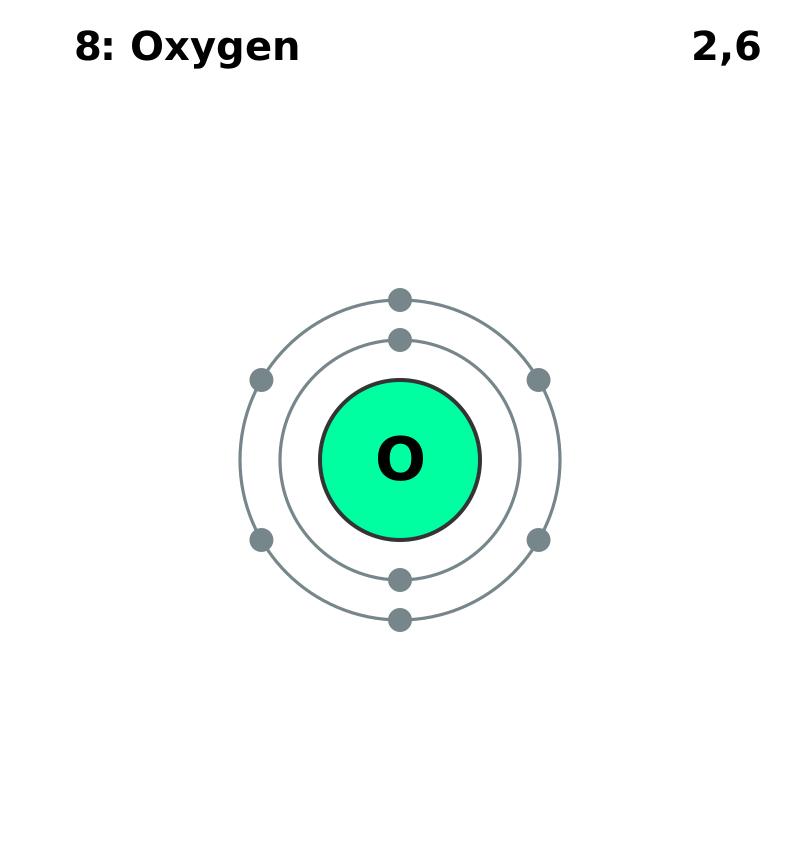
Electron shell Oxygen
Molecular oxygen (O₂), a colorless, odorless gas at room temperature, also called dioxygen.
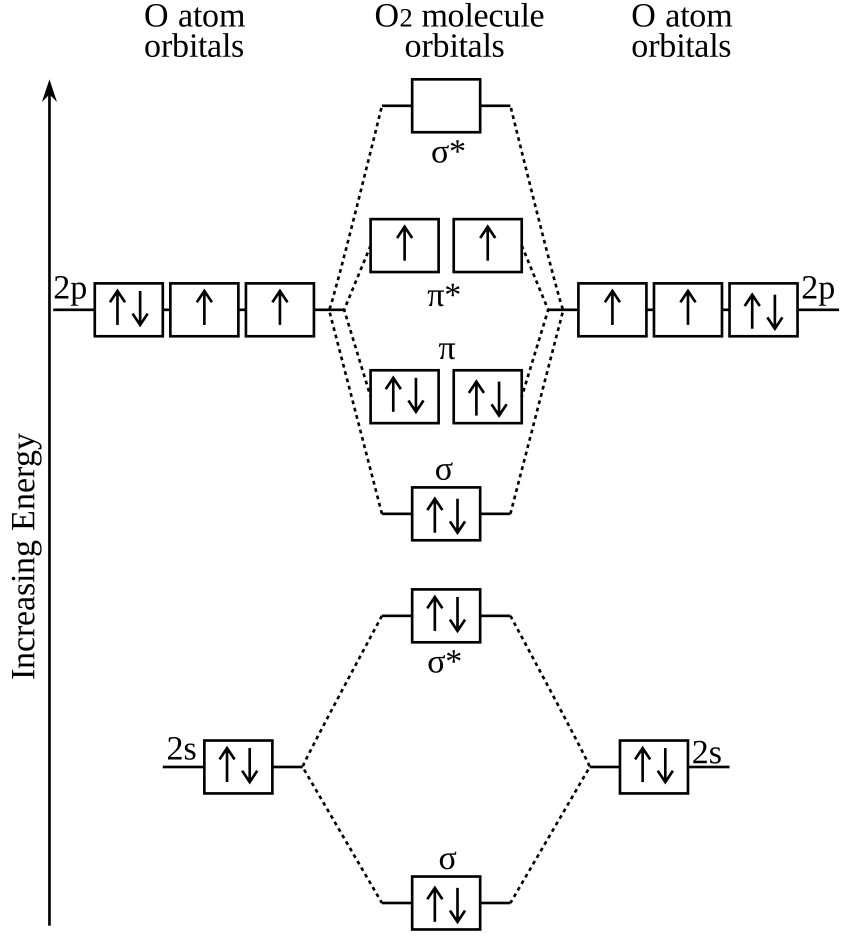
Orbital diagram, after Barrett (2002), showing the participating atomic orbitals from each oxygen atom, the molecular orbitals that result from their overlap, and the aufbau filling of the orbitals with the 12 electrons, 6 from each O atom, beginning from the lowest-energy orbitals, and resulting in covalent double-bond character from filled orbitals (and cancellation of the contributions of the pairs of σ and σ* and π and π* orbital pairs).

