Sanakirja
Tekoälykääntäjä

Kuvat
14

Synonyymit

| Kieli | Käännökset |
|---|---|
| bulgaria | мо́рков, морков (mórkov) |
| espanja | zanahoria |
| esperanto | karoto |
| hollanti | peen, wortel |
| italia | carota |
| japani | ニンジン (ninjin), 人参 (ninjin), にんじん (ninjin) |
| kreikka | καρότο (karóto) |
| latina | carota, daucum, carōta |
| latvia | burkāns |
| liettua | morka |
| norja | gulrot |
| portugali | cenoura |
| puola | marchewka, marchew |
| ranska | carotte |
| ruotsi | morot |
| saksa | Möhre, Mohrrübe, Karotte, gelbe Rübe |
| suomi | porkkana, käretsi |
| tanska | gulerod |
| turkki | havuç |
| tšekki | mrkev |
| unkari | sárgarépa, répa |
| venäjä | морква (morkva), морко́вь (morkóv), морко́вка (morkóvka), морковь (morkov), морковка (morkovka) |
| viro | porgand |
Määritelmät
Substantiivi
- A vegetable with a nutritious, juicy, sweet root that is often orange in colour, Daucus carota, family Apiaceae, especially the subspecies sativus.
- A shade of orange similar to the flesh of most carrots (also called carrot orange).
- (figurative) Any motivational tool; an incentive to do something.
- (UK, slang, derogatory) Someone from a rural background.
- (UK, slang) A police officer from somewhere within the British Isles, but specifically outside of Greater London.
- (slang) A redhead; a ginger-haired person
Verbi
- (transitive) To treat (an animal pelt) with a solution of mercuric nitrate as part of felt manufacture.
Taivutusmuodot
| Monikko | carrots |
A vegetable with a nutritious, juicy, sweet root that is often orange in colour, Daucus carota, family Apiaceae, especially the subspecies sativus.

Carrot – Daucus carota subsp. sativus – (Hoffm.) Schübl. & G. Martens – Carota sativa (Hoffm.) Rupr. Daucus sativus (Hoffm.).
(figurative) Any motivational tool; an incentive to do something.
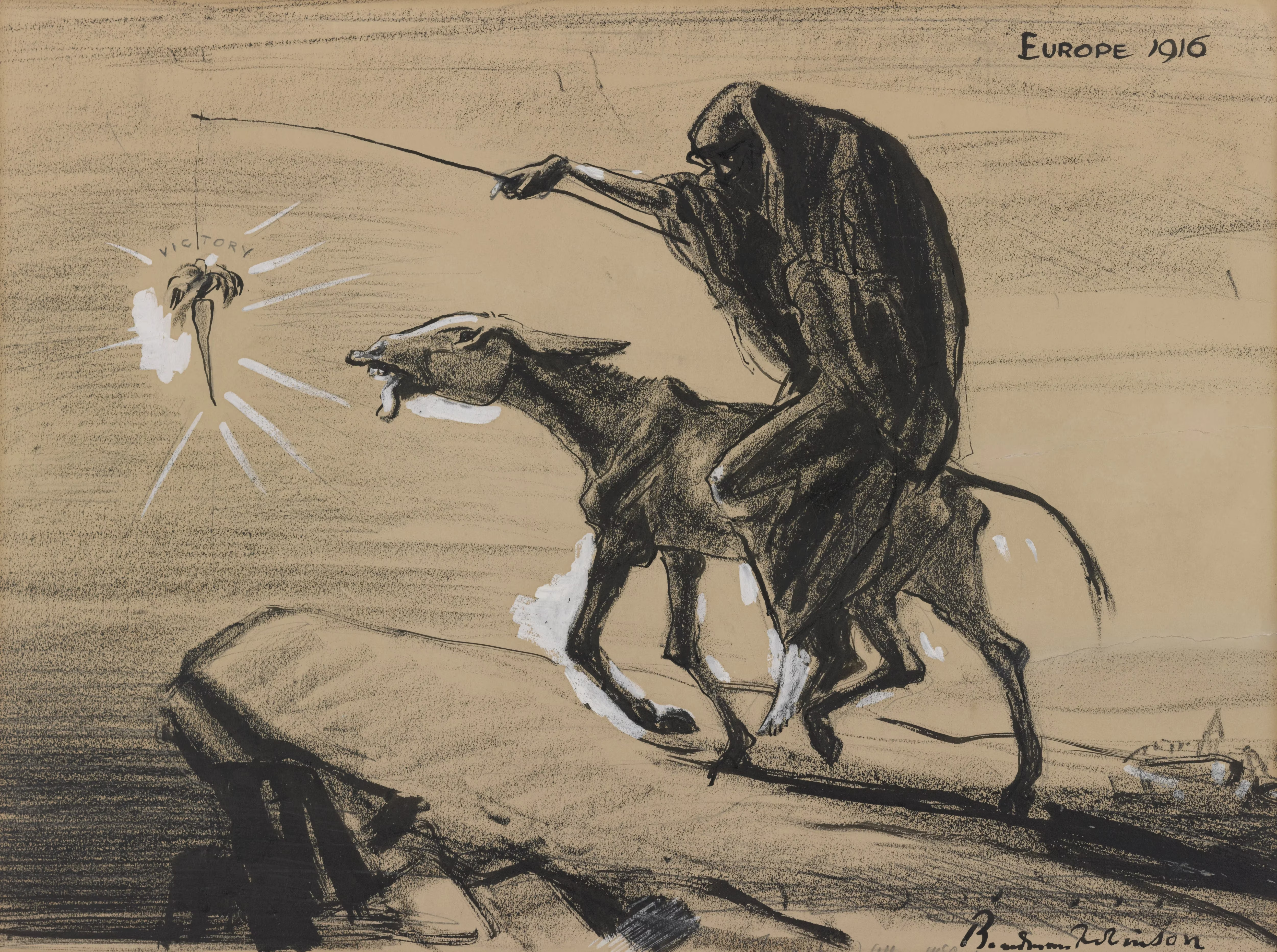
"Europe 1916", an anti-war cartoon by Boardman Robinson, depicting Death enticing an emaciated donkey towards a precipice with a carrot labeled "Victory" at the end of a stick
A vegetable with a nutritious, juicy, sweet root that is often orange in colour, Daucus carota, family Apiaceae, especially the subspecies sativus.

A depiction labeled "garden" carrot from the Juliana Anicia Codex, a 6th-century AD Constantinopolitan copy of Dioscorides' 1st-century Greek pharmacopoeia. The facing page states that "the root can be cooked and eaten."