Sanakirja
Tekoälykääntäjä

Kuvat
8

Vaihtoehtoiset kirjoitusmuodot

| Kieli | Käännökset |
|---|---|
| ranska | hanja |
| venäjä | ханча́ (hantšá) |
Määritelmät
Substantiivi
- The Han character script used to write Korean, particularly in classical literature.
- Any individual Han character as used in the Korean language.
Taivutusmuodot
| Monikko | hanja |
The Han character script used to write Korean, particularly in classical literature.
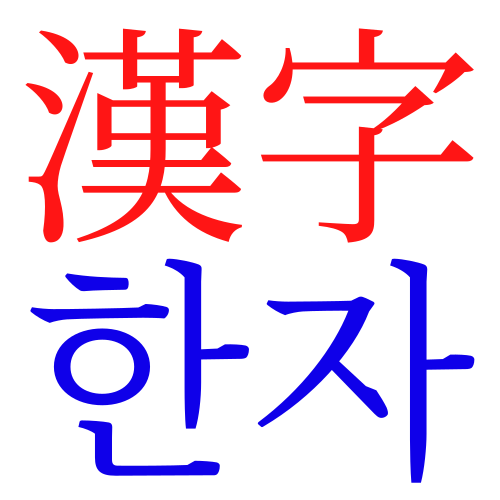
The Korean word Hanja (Chinese script) in Hanja (top) and Hangul (bottom).
The Han character script used to write Korean, particularly in classical literature.

The calligraphy of Korean scholar, poet and painter Kim Chŏnghŭi (김정희; 金正喜) of the early nineteenth century. Like most educated Koreans from the Three Kingdom period until the fall of the Joseon dynasty in 1910, Gim Jeong-hui composed most of his works in hanmun or literary Chinese.
The Han character script used to write Korean, particularly in classical literature.

The Korean Baegun Hwasang Chorok Buljo Jikji Simche Yojeol (백운화상초록불조직지심체요절; 白雲和尙抄錄佛祖直指心體要節) or roughly 'Anthology of Great Buddhist Priests' Zen Teachings Copied by Monk Baegun' is the oldest example of a book printed with moveable type and was printed in Korea in 1377, but is written in literary Chinese.