Sanakirja
Tekoälykääntäjä


Vaihtoehtoiset kirjoitusmuodot
Synonyymit

| Kieli | Käännökset |
|---|---|
| espanja | espada larga |
| hollanti | grootzwaard |
| italia | spadone |
| portugali | montante |
| saksa | Langschwert |
| suomi | pitkämiekka |
| venäjä | полутора́ручный меч (polutorárutšnyi metš), баста́рд (bastárd), дли́нный меч (dlínnyi metš), боево́й меч (bojevói metš) |
Määritelmät
Substantiivi
- Any type of sword that is comparatively long; depending on context, applied to swords of the Bronze Age, Migration period, Viking Age and Renaissance era.
- A European sword with a long, straight double-edged blade, a cruciform hilt, and a grip for two-handed use; prevalent from the 14th to 16th centuries.
Taivutusmuodot
| Monikko | longswords |
A European sword with a long, straight double-edged blade, a cruciform hilt, and a grip for two-handed use; prevalent from the 14th to 16th centuries.
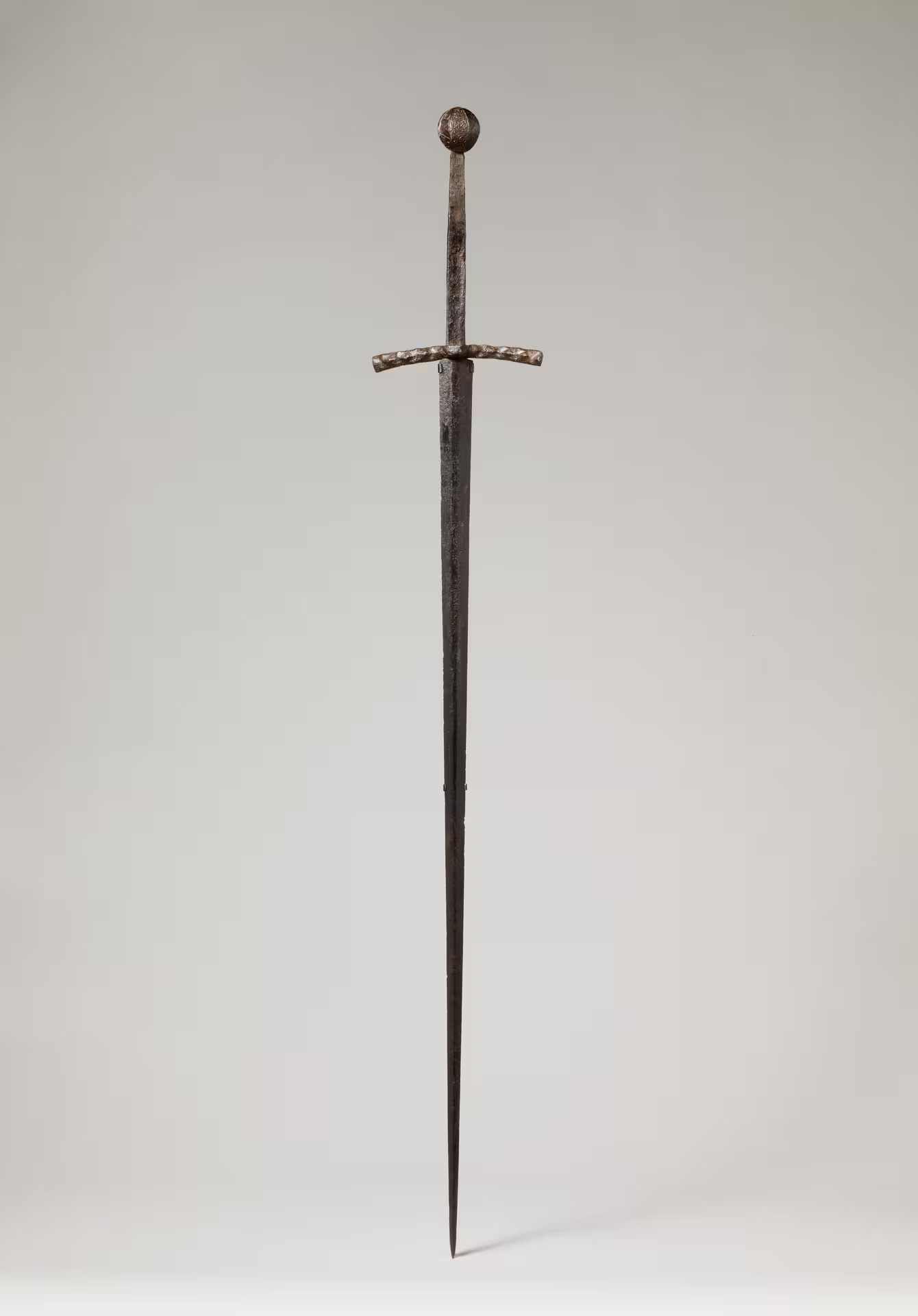
Hand-and-a-half sword, probably German, c. 1400–1430
A European sword with a long, straight double-edged blade, a cruciform hilt, and a grip for two-handed use; prevalent from the 14th to 16th centuries.

Replica of the Brescia Spadona, a 15th-century "hand and a half" longsword named after the city where it now resides, in the Museo Civico L. Mazzoli in Brescia, Italy. It has a tapered type XVIIIa or type XVIa blade and an octagonal pommel.