Sanakirja
Tekoälykääntäjä

Kuvat
10

Vaihtoehtoiset kirjoitusmuodot
- (vanhentunut) dictatour

| Kieli | Käännökset |
|---|---|
| bulgaria | диктатор (diktátor) |
| espanja | dictador, dictadora |
| esperanto | diktatoro |
| hollanti | dictator |
| italia | dittatore, dittatorello |
| japani | 独裁者 (dokusaisha), ワンマン (wanman) |
| kreikka | δικτάτορας (diktátoras) |
| latina | dictator |
| portugali | ditadora, ditador |
| puola | dyktator |
| ranska | dictateur |
| ruotsi | diktator, envåldshärskare |
| saksa | Diktator |
| suomi | diktaattori, yksinvaltias |
| tšekki | diktátor |
| unkari | diktátor |
| venäjä | диктатор (diktator) |
| viro | diktaator |
- Dictator on sanan dictater yleinen väärin kirjoitettu muoto.
Määritelmät
Substantiivi
- A totalitarian leader of a country, nation, or government.
- (history) A magistrate without colleague in republican Ancient Rome, who held full executive authority for a term granted by the Senate, typically to conduct a war.
- A tyrannical boss or authority figure.
Taivutusmuodot
| Monikko | dictators |
A totalitarian leader of a country, nation, or government.

20th-century leaders typically described as dictators (from left to right and top to bottom): Joseph Stalin of the Soviet Union; Adolf Hitler of Germany; Augusto Pinochet of Chile; Mao Zedong of China; Benito Mussolini of Italy; and Kim Il Sung of North Korea
(history) A magistrate without colleague in republican Ancient Rome, who held full executive authority for a term granted by the Senate, typically to conduct a war.
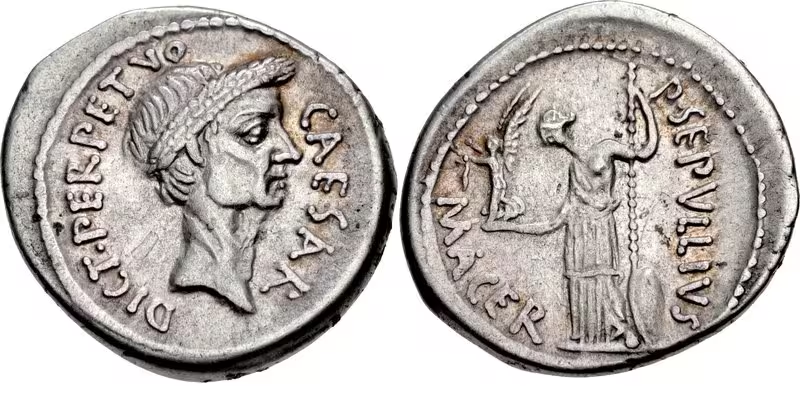
Denarius of Publius Sepullius Macer, 44 BC, with the head of Julius Caesar on the obverse. The legend mentions that Caesar was dictator perpetuo.
A tyrannical boss or authority figure.
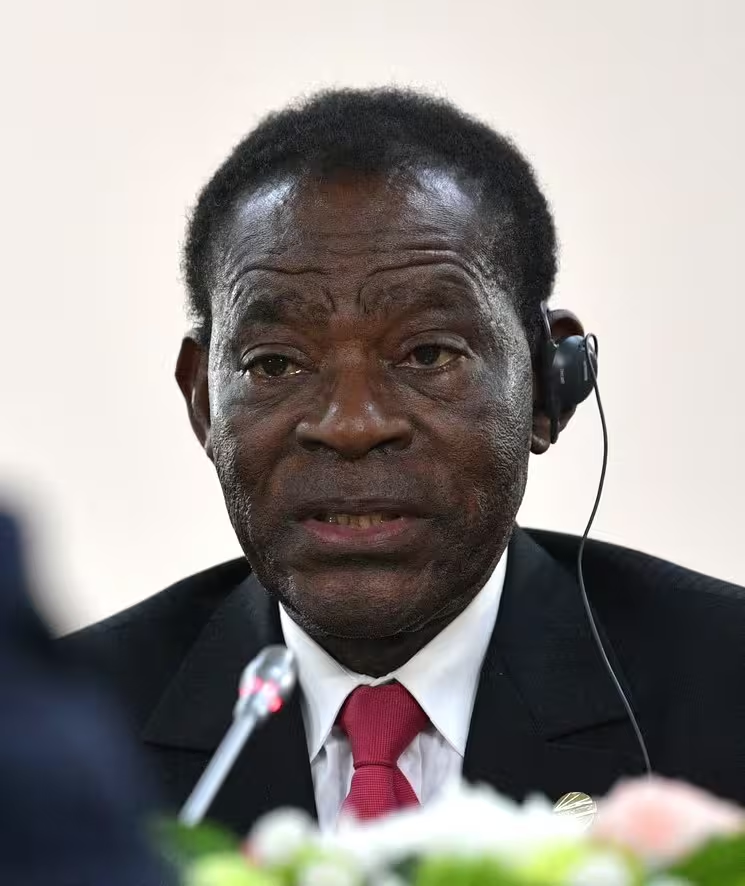
Teodoro Obiang Nguema Mbasogo of Equatorial Guinea is Africa's longest serving dictator.