Sanakirja
Tekoälykääntäjä


Ääntäminen
 US:
US:- IPA: /ˈænəˌɹoʊb/
| Kieli | Käännökset |
|---|---|
| espanja | anaerobio |
| italia | anaerobio |
| portugali | anaeróbio |
| ranska | anaérobie |
| suomi | anaerobinen |
Määritelmät
Substantiivi
Taivutusmuodot
| Monikko | anaerobes |
Luokat
An anaerobic organism; one that does not require oxygen to sustain its metabolic processes.

Spinoloricus cinziae, a metazoan that metabolises with hydrogen, lacking mitochondria and instead using hydrogenosomes
An anaerobic organism; one that does not require oxygen to sustain its metabolic processes.

Aerobic and anaerobic bacteria can be differentiated by culturing them in test tubes of thioglycolate broth:
- Obligate aerobes need oxygen because they cannot ferment or respire anaerobically. They gather at the top of the tube where the oxygen concentration is highest.
- Obligate anaerobes are poisoned by oxygen, so they gather at the bottom of the tube where the oxygen concentration is lowest.
- Facultative anaerobes can grow with or without oxygen because they can metabolize energy aerobically or anaerobically. They gather mostly at the top because aerobic respiration generates more adenosine triphosphate (ATP) than either fermentation or anaerobic respiration.
- Microaerophiles need oxygen because they cannot ferment or respire anaerobically. However, they are poisoned by high concentrations of oxygen. They gather in the upper part of the test tube but not the very top.
- Aerotolerant organisms do not require oxygen as they metabolize energy anaerobically. Unlike obligate anaerobes, however, they are not poisoned by oxygen. They are evenly distributed throughout the test tube.
An anaerobic organism; one that does not require oxygen to sustain its metabolic processes.
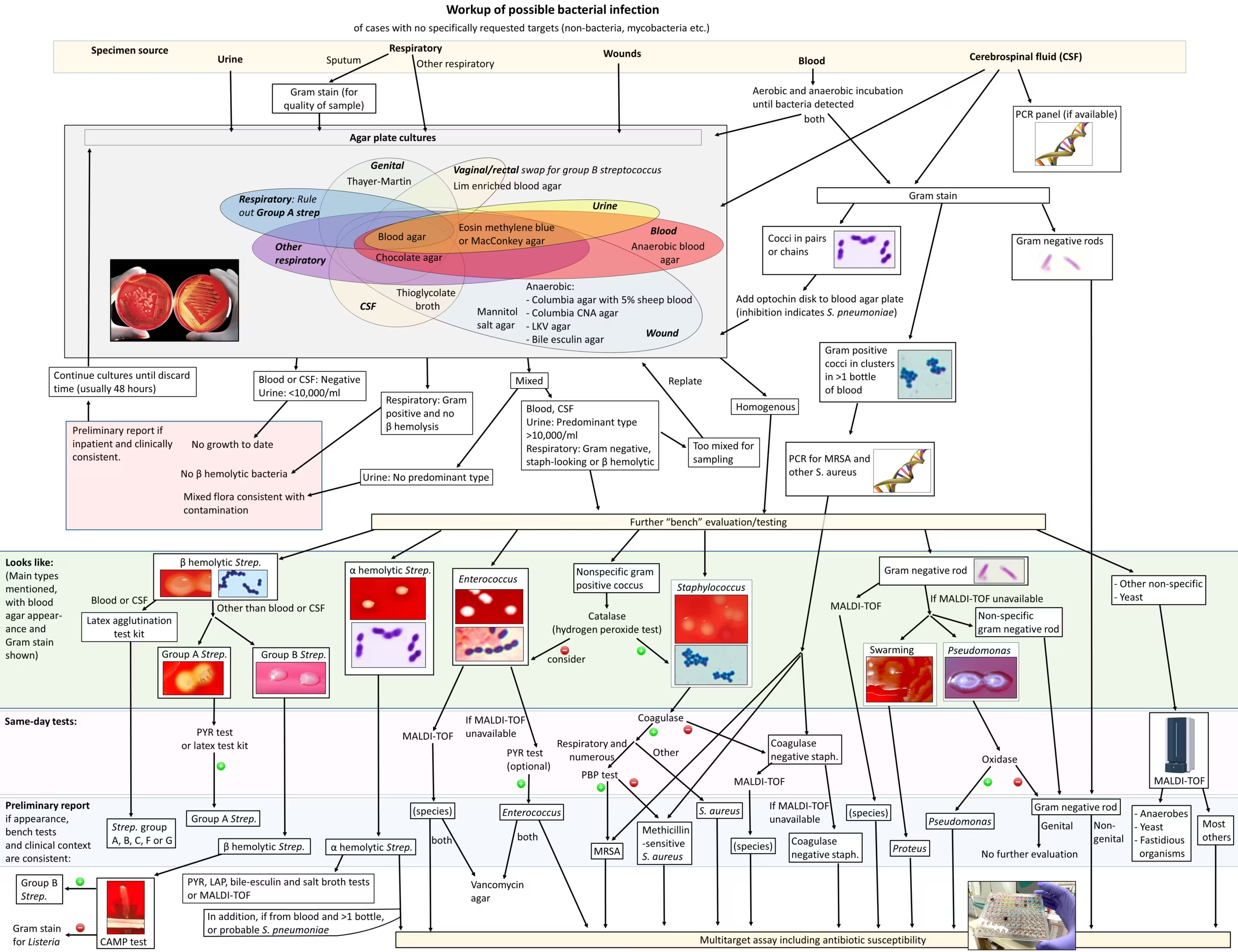
Example of a workup algorithm of possible bacterial infection in cases with no specifically requested targets (non-bacteria, mycobacteria, etc.), with most common situations and agents seen in a New England community hospital setting. Multiple anaerobic growth media are mentioned among agar plate cultures. Anaerobes may also be identified by MALDI-TOF as shown at bottom right.