Sanakirja
Tekoälykääntäjä

Kuvat
6

Vaihtoehtoiset kirjoitusmuodot
Ääntäminen
 Southern England
- Tuntematon aksentti:
- IPA: /ˈaɪ.ə.naɪz/
| Kieli | Käännökset |
|---|---|
| espanja | ionizar |
| esperanto | jonigi |
| italia | ionizzare |
| norja | ionisere |
| puola | jonizować |
| ranska | ioniser |
| saksa | ionisieren |
| suomi | ionisoida |
| tšekki | ionizovat |
| unkari | ionizál |
Määritelmät
Verbi
- (physical chemistry) To dissociate atoms or molecules into electrically charged species; to be thus dissociated.
Taivutusmuodot
| Partisiipin perfekti | ionized |
| Imperfekti | ionized |
| Partisiipin preesens | ionizing |
| Yksikön kolmannen persoonan indikatiivin preesens | ionizes |
(physical chemistry) To dissociate atoms or molecules into electrically charged species; to be thus dissociated.

The solar wind moving through the magnetosphere alters the movements of charged particles in the Earth's thermosphere or exosphere, and the resulting ionization of these particles causes them to emit light of varying color, thus forming auroras near the polar regions.
(physical chemistry) To dissociate atoms or molecules into electrically charged species; to be thus dissociated.

Avalanche effect in an electric field created between two electrodes. The original ionization event liberates one electron, and each subsequent collision liberates a further electron, so two electrons emerge from each collision: the ionizing electron and the liberated electron.
(physical chemistry) To dissociate atoms or molecules into electrically charged species; to be thus dissociated.
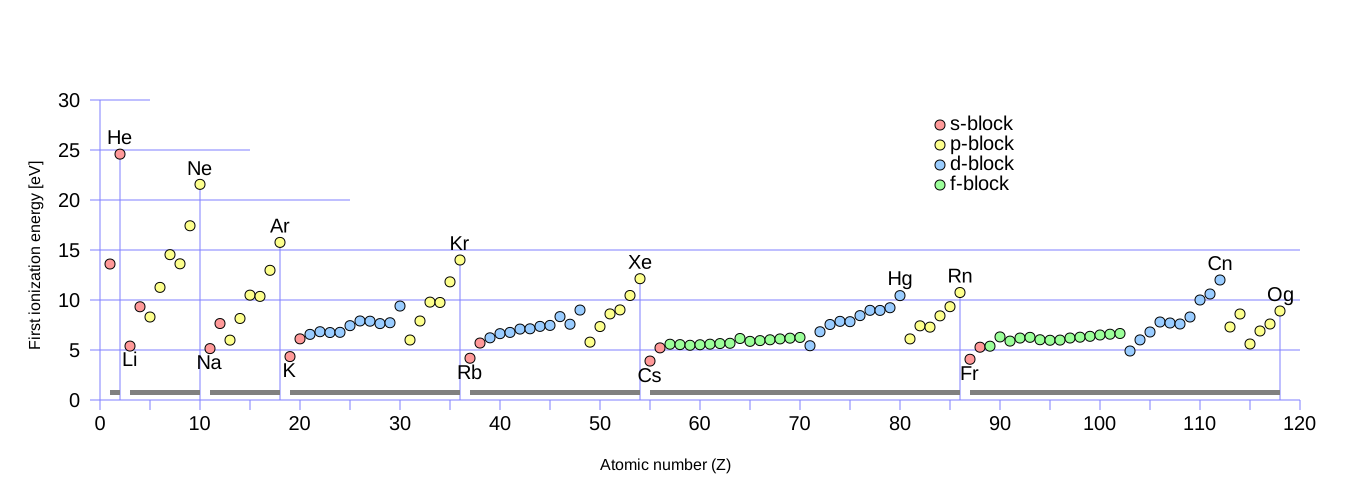
Ionization energies of neutral elements (predicted beyond 104)