Sanakirja
Tekoälykääntäjä

Kuvat
4

Ääntäminen
 US
US
| Kieli | Käännökset |
|---|---|
| espanja | retrovirus |
| italia | retrovirus |
| portugali | retrovírus |
| ranska | rétrovirus |
| suomi | retrovirus |
Määritelmät
Substantiivi
Taivutusmuodot
| Monikko | retroviruses |
Luokat
(virology) Any of a group of viruses which insert a copy of their RNA genome into the DNA of a host cell, thus changing the genome of that cell.

HIV retrovirus schematic of cell infection, virus production and virus structure
(virology) Any of a group of viruses which insert a copy of their RNA genome into the DNA of a host cell, thus changing the genome of that cell.
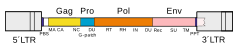
The genomic and subgenomic organization of a prototypical retrovirus. Abbreviations are explained in the file description.
(virology) Any of a group of viruses which insert a copy of their RNA genome into the DNA of a host cell, thus changing the genome of that cell.
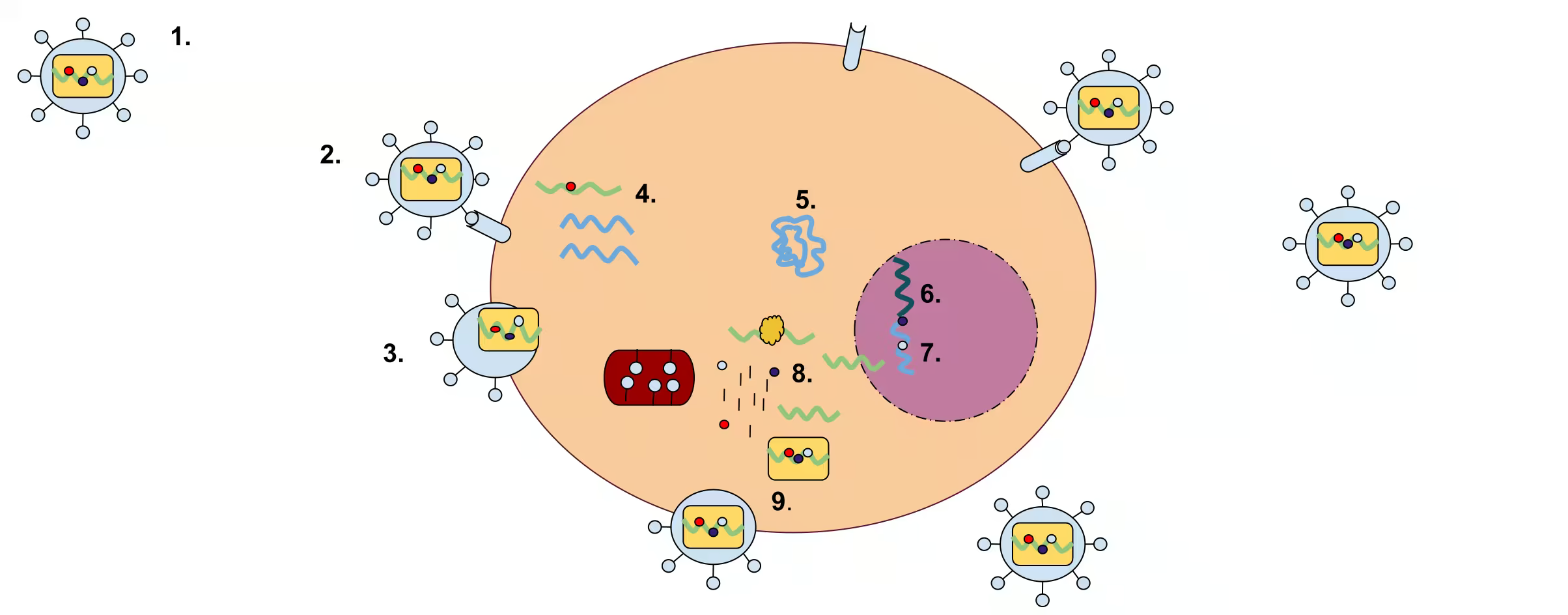
A retrovirus has a membrane containing glycoproteins, which are able to bind to a receptor protein on a host cell. There are two strands of RNA within the cell that have three enzymes: protease, reverse transcriptase, and integrase (1). The first step of replication is the binding of the glycoprotein to the receptor protein (2). Once these have been bound, the cell membrane degrades, becoming part of the host cell, and the RNA strands and enzymes enter the cell (3). Within the cell, reverse transcriptase creates a complementary strand of DNA from the retrovirus RNA and the RNA is degraded; this strand of DNA is known as cDNA (4). The cDNA is then replicated, and the two strands form a weak bond and enter the nucleus (5). Once in the nucleus, the DNA is integrated into the host cell's DNA with the help of integrase (6). This cell can either stay dormant, or RNA may be synthesized from the DNA and used to create the proteins for a new retrovirus (7). Ribosome units are used to translate the mRNA of the virus into the amino acid sequences which can be made into proteins in the rough endoplasmic reticulum. This step will also make viral enzymes and capsid proteins (8). Viral RNA will be made in the nucleus. These pieces are then gathered together and are pinched off of the cell membrane as a new retrovirus (9).