Sanakirja
Tekoälykääntäjä

Kuvat
25


| Kieli | Käännökset |
|---|---|
| espanja | anatomía |
| esperanto | anatomio |
| hollanti | anatomie |
| italia | anatomia, anatomico |
| japani | 解剖学 (kaibōgaku), 解剖 (kaibō), かいぼうがく (kaibōgaku) |
| kreikka | ανατομία (anatomía) |
| latina | anatomia |
| latvia | anatomija |
| liettua | anatomija |
| portugali | anatomia |
| puola | anatomia |
| ranska | anatomie |
| ruotsi | anatomi, anat. |
| saksa | Anatomie |
| suomi | anatomia, koiranomi |
| tanska | anatomi |
| turkki | anatomi, yapıbilim |
| tšekki | anatomie |
| unkari | anatómia |
| venäjä | анатомирова́ние (anatomirovánije), анато́мия (anatómija), анатомирование (anatomirovanije), анатомия (anatomija) |
| viro | anatoomia |
Määritelmät
Substantiivi
- The art of studying the different parts of any organized body, to discover their situation, structure, and economy.
- The science that deals with the form and structure of organic bodies; anatomical structure or organization.
- (countable) A treatise or book on anatomy.
- (by extension) The act of dividing anything, corporeal or intellectual, for the purpose of examining its parts.
- (colloquial) The form of an individual.
- (euphemistic) The human body, especially in reference to the private parts.
- (archaic) A skeleton, or dead body.
- The physical or functional organization of an organism, or part of it.
Esimerkit
- Let the muscles be well inserted and bound together, according to the knowledge of them which is given us by anatomy.
- Animal anatomy is also called zomy or zootomy; vegetable anatomy, phytotomy; and human anatomy, anthropotomy.
- "I went to the Venice beach body building competition and noticed the competitor from Athen, and boy oh boy lemme tell ya, that's what a call classic Greek anatomy."
- So did the Ægyptians, who in the middest of their banquetings, and in the full of their greatest cheere, caused the anatomie of a dead man to be brought before them, as a memorandum and warning to their guests.
- The yawning gap in neuroscientists’ understanding of their topic is in the intermediate scale of the brain’s anatomy. Science has a passable knowledge of how individual nerve cells, known as neurons, work. It also knows which visible lobes and ganglia of the brain do what. But how the neurons are organised in these lobes and ganglia remains obscure.
Taivutusmuodot
| Monikko | anatomies |
Luokat
The art of studying the different parts of any organized body, to discover their situation, structure, and economy.

One of the large, detailed illustrations in Andreas Vesalius's De humani corporis fabrica 16th century, marking the rebirth of anatomy
The science that deals with the form and structure of organic bodies; anatomical structure or organization.

A dissected body, lying prone on a table, by Charles Landseer

(by extension) The act of dividing anything, corporeal or intellectual, for the purpose of examining its parts.

Michiel Jansz van Mierevelt – Anatomy lesson of Dr. Willem van der Meer, 1617
(colloquial) The form of an individual.

An anatomy thangka, part of Desi Sangye Gyatso's The Blue Beryl, 17th century
(euphemistic) The human body, especially in reference to the private parts.
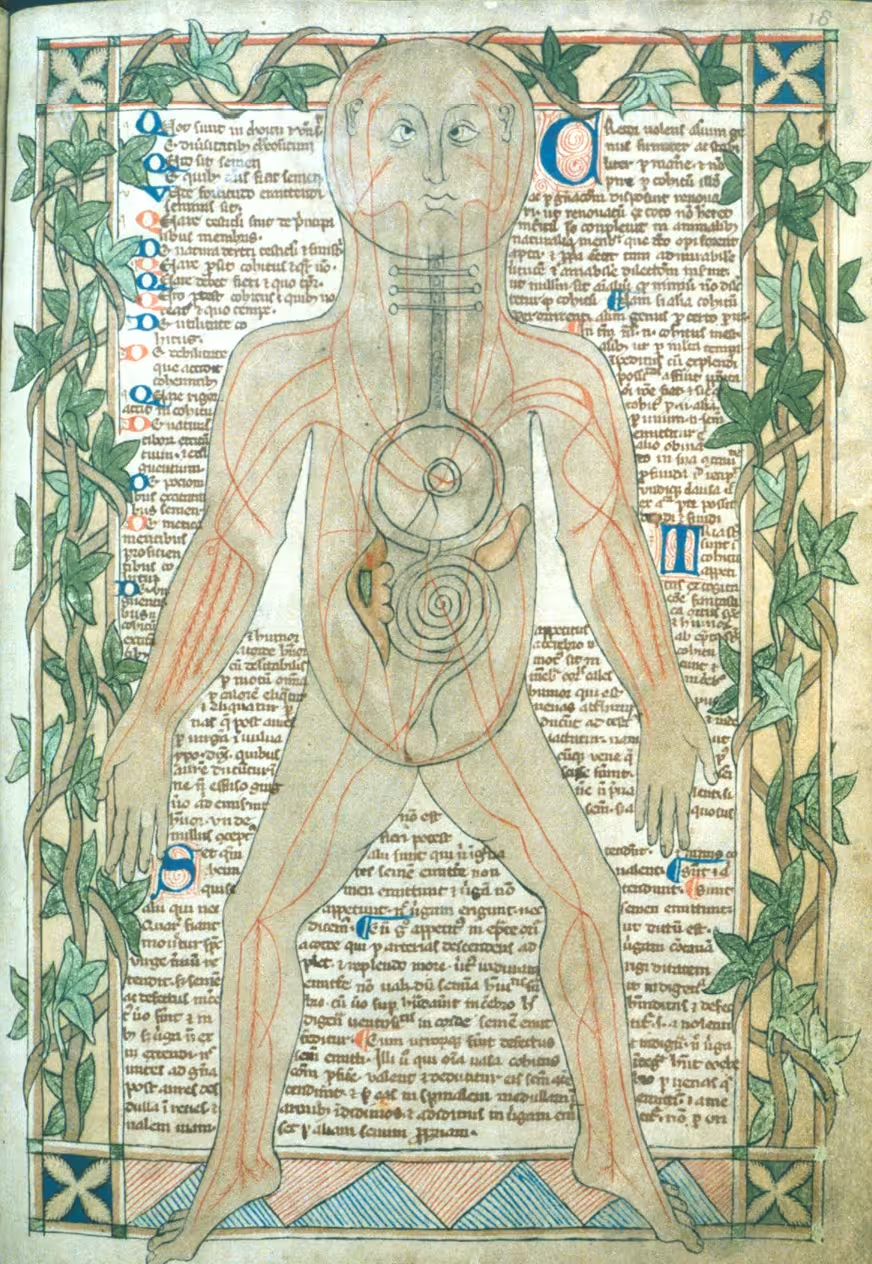
13th century anatomical illustration
The physical or functional organization of an organism, or part of it.

Stylized cutaway diagram of an animal cell (with flagella)