Sanakirja
Tekoälykääntäjä

Kuvat
3

Ääntäminen
 Southern England
- UK:
- IPA: /daɪəˈstɒlɪk/
| Kieli | Käännökset |
|---|---|
| italia | diastolico |
| portugali | diastólico |
| ranska | diastolique |
| suomi | diastolinen |
Määritelmät
Adjektiivi
- Pertaining to a diastole.
Substantiivi
- (medicine, colloquial) Ellipsis of diastolic blood pressure.
Taivutusmuodot
| Komparatiivi | more diastolic |
| Superlatiivi | most diastolic |
| Monikko | diastolics |
Luokat
Pertaining to a diastole.
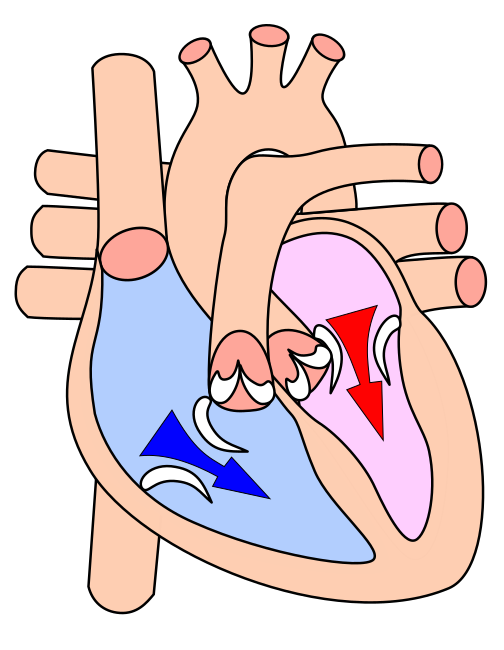
Early ventricular diastole is the filling of blood from the atria (from the left atrium shown in pink, and from the right atrium shown in blue) that weakly contract letting blood fill into the ventricles; in late ventricular diastole, the two atria begin to contract (atrial systole), forcing additional blood flow into the ventricles.

Pertaining to a diastole.

A Wiggers diagram, showing various events during diastole. During early ventricular diastole—see vertical bar marked "Isovolumetric relaxation"—pressure in each ventricle (light-blue trace) begins to drop quickly from the wave height reached during systole. When ventricular pressures fall below those in the atrial chambers the atrioventricular (mitral and tricuspid) valves open, causing blood volume (red trace) in the atria to flow into the ventricles. In late ventricular diastole, the two atrial chambers begin to contract (atrial systole), causing blood pressure in both atria to increase and forcing additional blood volume into the ventricles. This beginning of the atrial systole is known as the atrial kick—see "Ventricular volume" trace (red) directly above the P-wave in the electrocardiogram trace (dark-blue).