Ääntäminen
 US
US- Tuntematon aksentti:
- IPA: /ˈstæli.ən/
- IPA: /ˈstæljən/
Haettu sana löytyi näillä lähdekielillä:
| Kieli | Käännökset |
|---|
| bulgaria | жребе́ц, жребец |
| espanja | cojudo, potro, entero, padrillo, cuero, mango, semental, papasote |
| esperanto | virĉevalo, stalono |
| hollanti | hengst, dekhengst |
| italia | stallone |
| kreikka | άλογο (álogo) |
| latvia | ērzelis |
| liettua | eržilas |
| norja | hingst |
| portugali | garanhão |
| puola | ogier |
| ranska | étalon, étalonnier |
| ruotsi | hingst, avelshingst |
| saksa | Hengst, Pferdehengst, Pferdemännchen, Schälhengst, Schellhengst, Beschäler, Deckhengst, Zuchthengst |
| suomi | ori, oro |
| tanska | hingst, hanhest, avlshingst |
| turkki | aygır |
| tšekki | hřebec |
| unkari | csődör, mén |
| venäjä | саме́ц-производи́тель (saméts-proizvodítel), жеребе́ц (žerebéts), жеребец (žerebets) |
| viro | täkk |
Määritelmät
Substantiivi
- An adult male horse.
- Specifically, one that is uncastrated.
- A male horse kept primarily as a stud.
- A very virile and sexually-inclined man or (rarely) woman.
Taivutusmuodot
Specifically, one that is uncastrated.

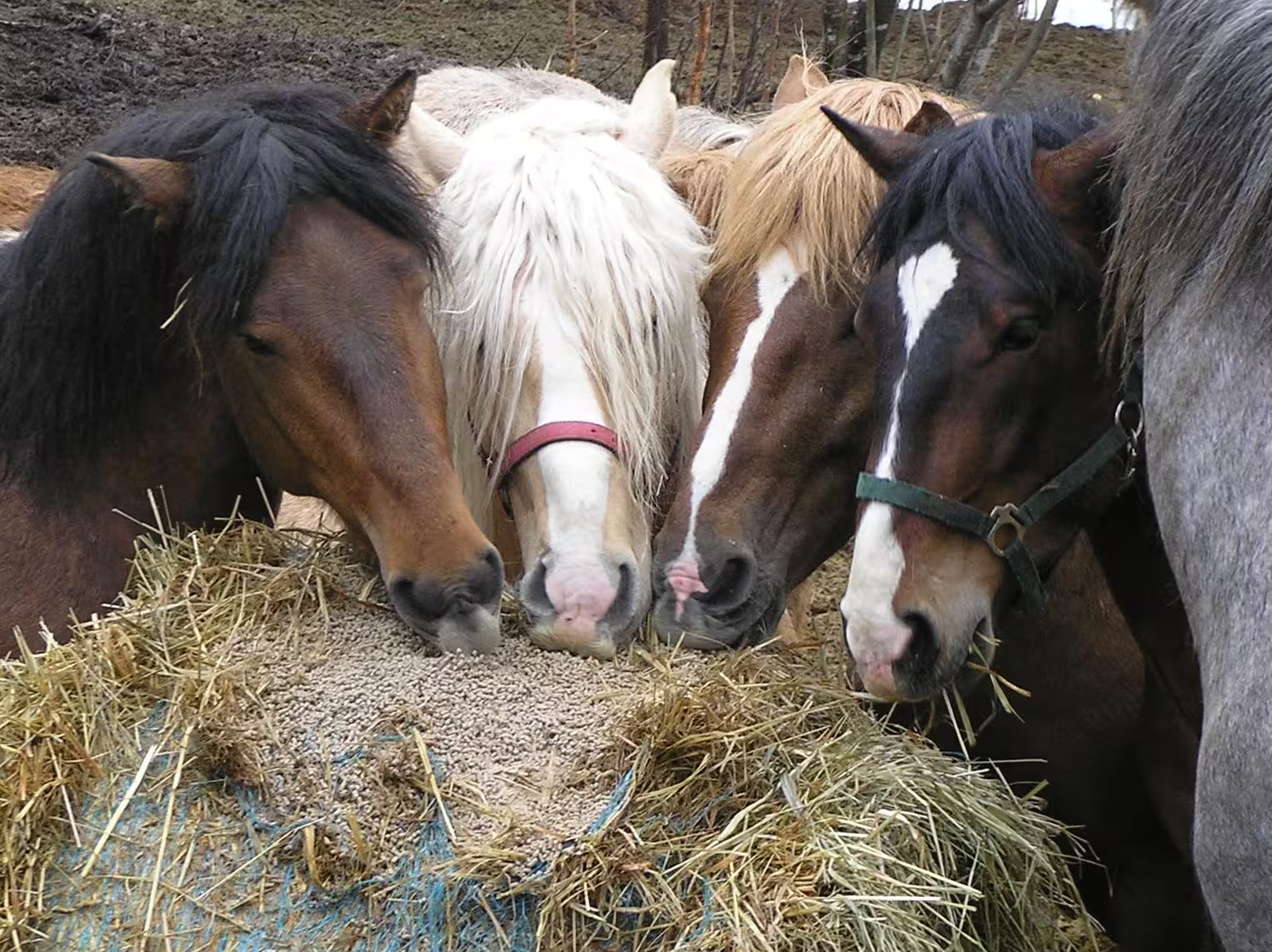
A stallion
A male horse kept primarily as a stud.

Provided with sufficient space and food with no distractions from mares in estrus, even stallions previously used for breeding may coexist peacefully. Not all individuals are suited for this kind of arrangement, however.
Specifically, one that is uncastrated.

A stallion's secondary characteristics include heavier muscling than is seen in mares or geldings, often with muscular development along the crest of the neck.