Sanakirja
Tekoälykääntäjä


| Kieli | Käännökset |
|---|---|
| italia | peplo |
| ranska | péplos |
Määritelmät
Substantiivi
- (historical) An Ancient Greek garment, worn by women, formed of a tubular piece of cloth, which is folded back upon itself halfway down, until the top of the tube is worn around the waist, and the bottom covers the legs down to the ankles; the open top is then worn over the shoulders, and draped, in folds, down to the waist.
Esimerkit
- An obvious question arises: what on earth can Herakles do with a peplos? Throughout Greek tradition, the peplos ("piece of cloth, veil, dress") is a woman's garment, and sometimes a barbarian's garment—no contradiction, as far as a Greek is concerned.
- The garments (peploi) that serve the Trojan women as a pretext to laying hands on their victims are also the means of concealing the daggers that will kill [...]
- I leave aside the vexed questions about whether one or two peploi were woven and presented to Athena during the Greater (every four years) and Lesser (every year) Panathenaic festivals [...]
Taivutusmuodot
| Monikko | peploi |
| Monikko | peploses |
(historical) An Ancient Greek garment, worn by women, formed of a tubular piece of cloth, which is folded back upon itself halfway down, until the top of the tube is worn around the waist, and the bottom covers the legs down to the ankles; the open top is then worn over the shoulders, and draped, in folds, down to the waist.
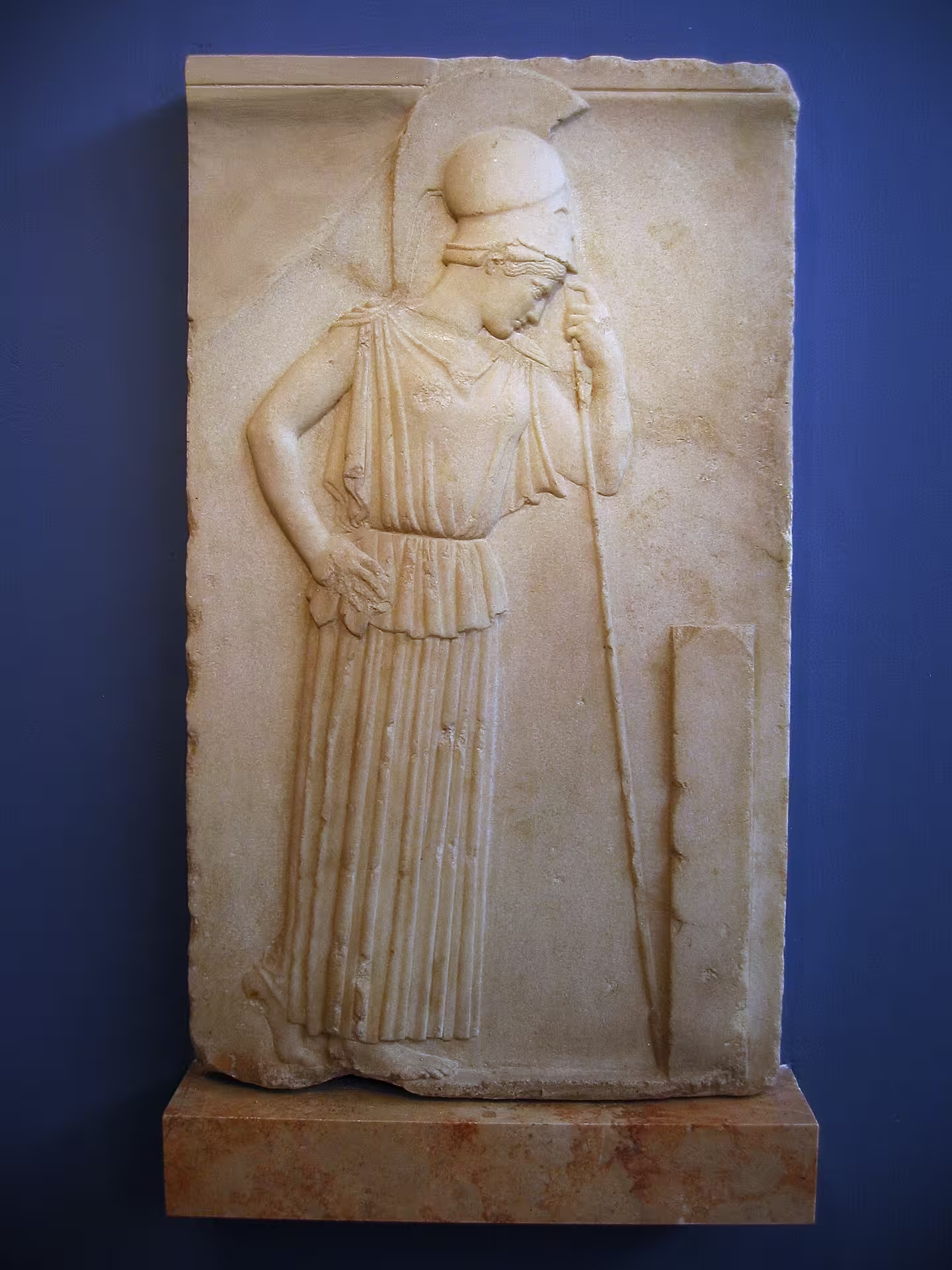
The Mourning Athena relief with Athena wearing a peplos, c. 460 BC
(historical) An Ancient Greek garment, worn by women, formed of a tubular piece of cloth, which is folded back upon itself halfway down, until the top of the tube is worn around the waist, and the bottom covers the legs down to the ankles; the open top is then worn over the shoulders, and draped, in folds, down to the waist.

So-called "Exaltation de la Fleur" (exaltation of the flower), fragments from a secondary grave stele: two women wearing a peplos and kekryphalos (hairnet), hold poppy or pomegranate flowers, and maybe a small bag of seeds. Parian marble, c. 470–460 BC. From Pharsalos, Thessaly.
(historical) An Ancient Greek garment, worn by women, formed of a tubular piece of cloth, which is folded back upon itself halfway down, until the top of the tube is worn around the waist, and the bottom covers the legs down to the ankles; the open top is then worn over the shoulders, and draped, in folds, down to the waist.

The Panathenaea peplos, from the Parthenon frieze