Sanakirja
Tekoälykääntäjä


Vaihtoehtoiset kirjoitusmuodot
| Kieli | Käännökset |
|---|---|
| ranska | néopaïen |
| ruotsi | nyhednisk |
| suomi | uuspakana, uuspakanallinen |
Määritelmät
Adjektiivi
- Of or relating to neo-paganism; a modern form of paganism.
Substantiivi
- An adherent of neo-paganism; a modern pagan.
Esimerkit
- The Italian Renaissance produced a brief but astounding burst of neo-pagan individualism.
- The neopagan impulse of the classical revival.
- The very persons who would most writhe and wail at their surroundings if transported back into early Greece, would, I think, be the neo-pagans and Hellas worshipers of today.
Taivutusmuodot
| Monikko | neo-pagans |
Of or relating to neo-paganism; a modern form of paganism.

Collection of various symbols used for or by modern pagan religions or groups. The symbols are identified by the uploader as (from left to right): 1st Row Slavic Rodnovery ("Slavic Cross") Celtic Neopaganism (or general triskele / triple spiral) Germanic Heathenism ("Thor's Hammer") Latvian Dievturi ("Cross of crosses or Cross of Māra") 2nd Row Hellenism Armenian Hetanism ("Arevakhach") Italo-Roman Neopaganism Kemetism ("ankh", key of life, handled cross) 3rd Row Wicca (pentagram or pentacle) Finnish Neopaganism ("Tursaansydän") Hungarian Neopaganism (double cross or "világfa", world tree) Lithuanian Romuva (sun symbol composed of grass snakes) 4th Row Estonian Neopaganism ("Jumiõis", cornflower) Circassian Habzism ("hammer cross") Semitic Neopaganism ("hamsa") Goddess movement and Wicca (raised-arms female figure)
Of or relating to neo-paganism; a modern form of paganism.
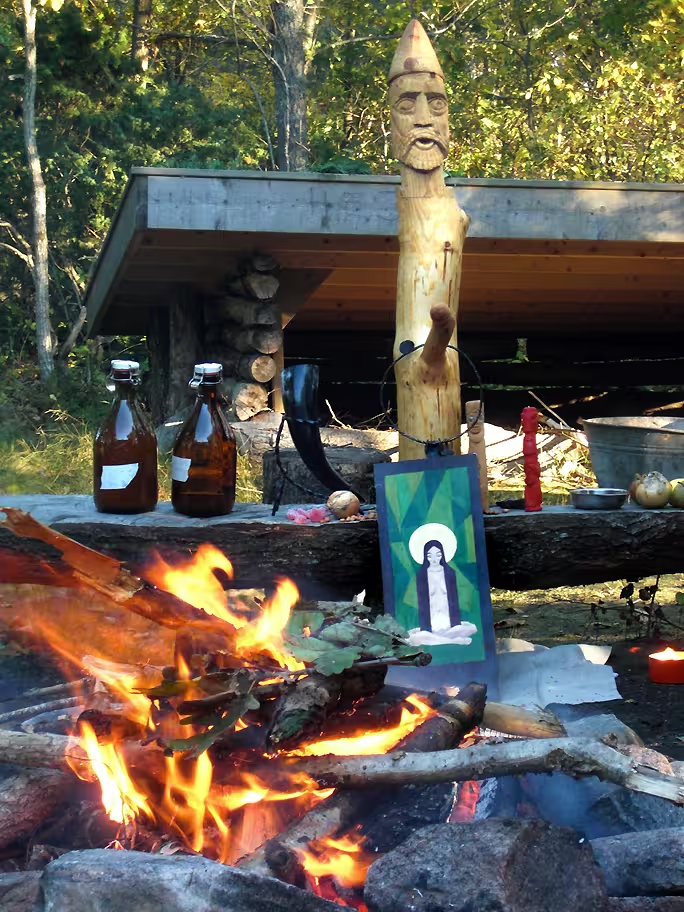
Heathen altar for Haustblot in Björkö, Sweden. The larger wooden idol represents the god Frey.
Of or relating to neo-paganism; a modern form of paganism.

Romuvan priestess Inija Trinkūnienė leading a ritual