Sanakirja
Tekoälykääntäjä


Synonyymit
- giant kettle
- (materiaali)frost boil
- (biologia)plunge pool
- (biologia)scour basin
Ääntäminen
- IPA: /ˈpɒt.ˌhəʊl/
| Kieli | Käännökset |
|---|---|
| espanja | bache, torco |
| hollanti | kuil |
| italia | buca |
| japani | 甌穴 (おうけつ, ōketsu, かめあな, kameana) |
| kreikka | λακκούβα (lakkoúva), βαθούλωμα (vathoúloma) |
| portugali | caldeirão |
| ranska | nid de poule, fondrière, marmite de géant, oule |
| ruotsi | jättegryta |
| saksa | Schlagloch |
| suomi | kuoppa, hiidenkirnu, monttu, kuopanne |
| tanska | jættegryde |
| turkki | yol çukuru |
| tšekki | výmol, výtluk |
| venäjä | выбоина (vyboina), рытвина (rytvina), ухаб (uhab) |
Määritelmät
Substantiivi
- A shallow pit or other edged depression in a road's surface, especially when caused by erosion by weather or traffic.
- A hole or recess on the top of a stove into which a pot may be placed.
- A pit formed in the bed of a turbulent stream.
- (geology) A vertical cave system, often found in limestone.
- (archaeology) A pit resulting from unauthorized excavation by treasure-hunters or vandals.
- (Australia, mining) A shallow hole dug for the purpose of prospecting for opal or gold.
- (fandom slang, TV Tropes) A hyperlink with text displayed on a page that is different from the title of the page to which the text links; a piped link.
Esimerkit
- The earliest ideas on the creation of potholes are that they were associated with "moulins de glacier" (glacier mills) formed where surface streams on glaciers and ice sheets fall into holes in the ice. Water entering these surficial holes was believed to impact on the bedrock beneath creating a large pothole. The "Moulin Hypothesis", first suggested in 1874, continued to be accepted by many authors until the 1950s. However, commencing in the 1930s, other authors have suggested dissatisfaction with the moulin hypothesis, largely on the grounds that it failed to explain how ice could remain stable long enough for the "giant" potholes to form and why many potholes (like those at Rockwood) were present in large numbers. Grand River Conservation Authority (Canada) Newsletter of May-June 2002.
- Most potholes are formed due to fatigue of the pavement surface.
Taivutusmuodot
| Monikko | potholes |
A shallow pit or other edged depression in a road's surface, especially when caused by erosion by weather or traffic.
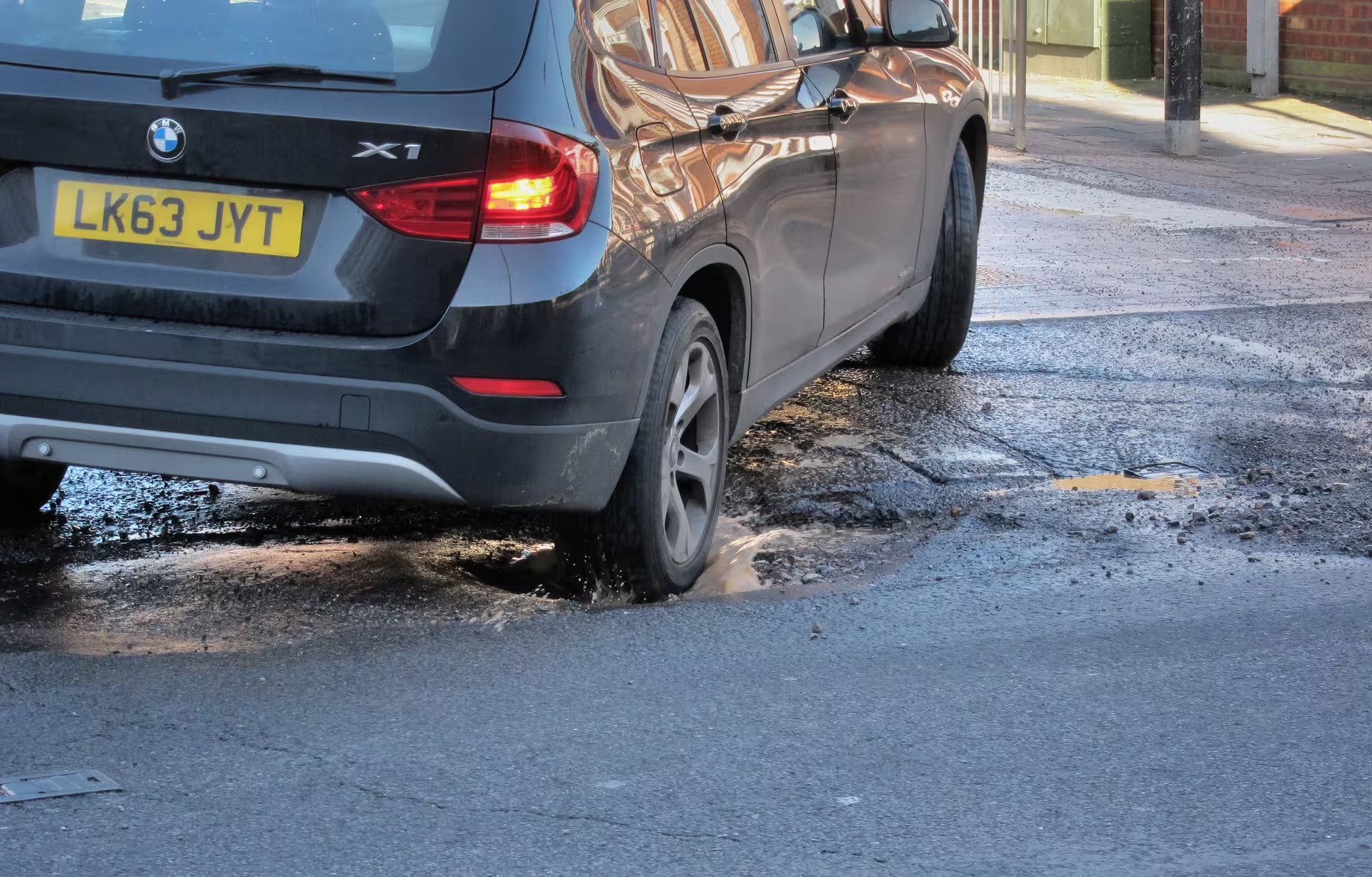
Potholes occur with traffic over a roadway that has been weakened by water in the supporting soil structure.
A pit formed in the bed of a turbulent stream.

River Orchy, Scotland, showing erosion potholes in bedrock
A shallow pit or other edged depression in a road's surface, especially when caused by erosion by weather or traffic.

Factors leading to pothole failure by fatigue in areas subject to freezing and thawing are: 1. Precipitation adds moisture to supporting soil structure. 2. Frost heaving can damage pavement. 3. Thawing can weaken soil structure. 4. Traffic can break the pavement.