Sanakirja
Tekoälykääntäjä

Kuvat
3

(taxonomy) The condition of being polyphyletic
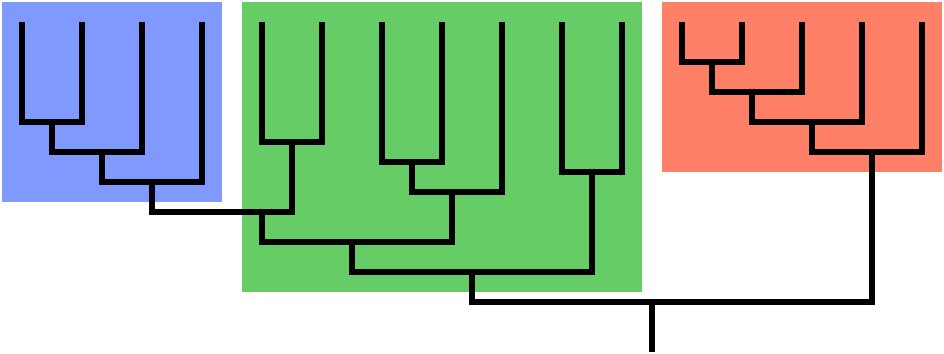
In this phylogenetic tree, the blue and red groups (which are both monophyletic) do not share an immediate common ancestor. If they are grouped together because they share characteristics which appear to be similar, then their combination forms a polyphyletic group.
(taxonomy) The condition of being polyphyletic
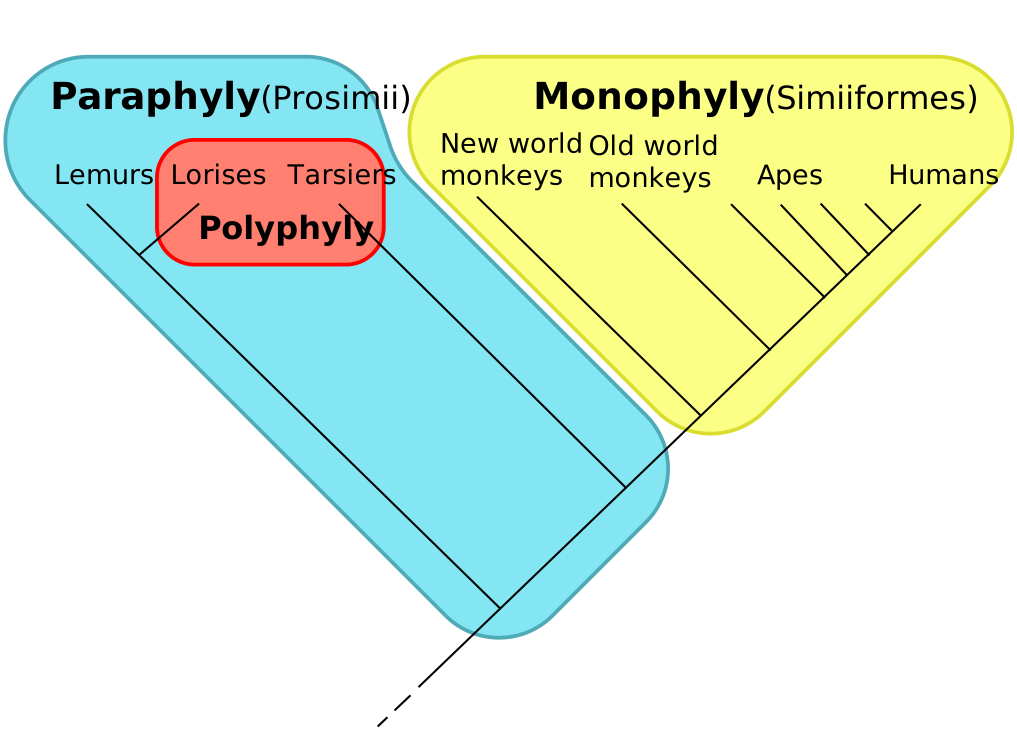
Cladogram of the primates, showing a monophyly (the simians, in yellow), a paraphyly (the prosimians, in cyan, including the red patch), and a polyphyly (the night-active primates, the lorises and the tarsiers, in red).
(taxonomy) The condition of being polyphyletic
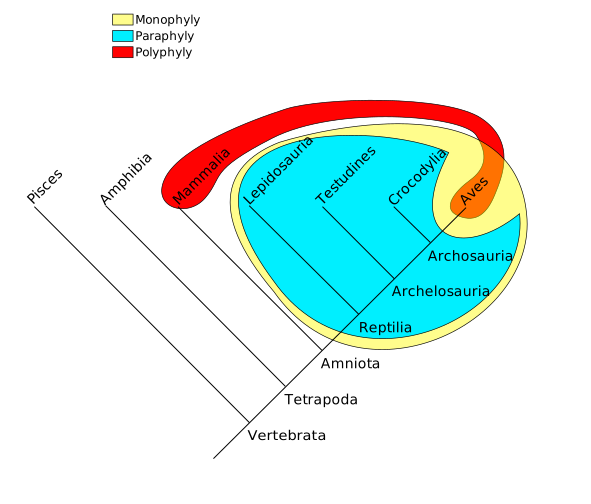
Phylogenetic groups: A monophyletic taxon (in yellow, the clade Sauropsida grouping "reptiles and birds") contains a common ancestor and all of its descendants. A paraphyletic taxon (in cyan, the "reptiles") contains its most recent common ancestor, but does not contain all the descendants of that ancestor. A polyphyletic taxon (in red, the group Haemothermia containing warm-blooded tetrapods) does not contain the most recent common ancestor of all its members.