Sanakirja
Tekoälykääntäjä


Vaihtoehtoiset kirjoitusmuodot
- (harvinainen) vivipartous
Ääntäminen
 Southern England
- Tuntematon aksentti:
- IPA: /vɪˈvɪpəɹəs/
| Kieli | Käännökset |
|---|---|
| espanja | vivíparo |
| hollanti | levendbarend |
| italia | viviparo |
| japani | 胎生の (たいせいの, taisei no) |
| kreikka | ζωοτόκος (zootókos) |
| portugali | vivíparo |
| ranska | vivipare |
| saksa | lebendgebärend, vivipar, lebend gebärend |
| suomi | vivipaarinen |
| venäjä | живородя́щий (živorodjáštši) |
Määritelmät
Adjektiivi
- (of an animal or animal species) Being born alive, as are most mammals, some reptiles, and a few fish (as opposed to being laid as an egg and subsequently hatching, as do most birds and many other species).
- (of a plant or plant species) Arising from an embryo that develops from the outset (rather than from a true seed that then germinates).
(of an animal or animal species) Being born alive, as are most mammals, some reptiles, and a few fish (as opposed to being laid as an egg and subsequently hatching, as do most birds and many other species).
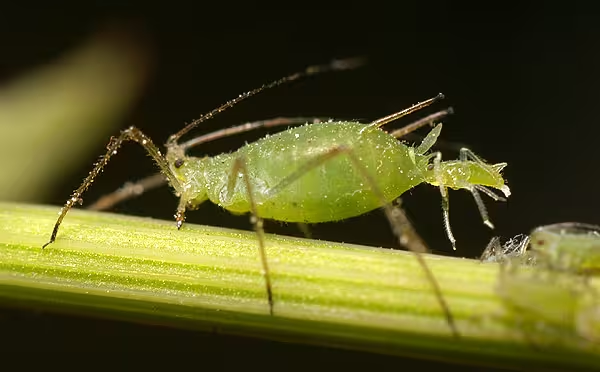
An aphid giving viviparous birth, an unusual mode of reproduction among insects
(of an animal or animal species) Being born alive, as are most mammals, some reptiles, and a few fish (as opposed to being laid as an egg and subsequently hatching, as do most birds and many other species).

Hemotrophic viviparity: a mammal embryo (centre) attached by its umbilical cord to a placenta (top) which provides food