Sanakirja
Tekoälykääntäjä


Synonyymit
Ääntäminen

| Kieli | Käännökset |
|---|---|
| bulgaria | екология (ekologija) |
| espanja | ecología |
| esperanto | ekologio |
| hollanti | ecologie |
| italia | ecologia, bionomia |
| japani | 生態学 (seitaigaku), せいたいがく (seitaigaku), 生態 (seitai) |
| kreikka | οικολογία (oikología) |
| latina | oecologia |
| latvia | ekoloģija |
| liettua | ekologija |
| portugali | ecologia |
| puola | ekologia |
| ranska | écologie |
| ruotsi | ekologi, miljöforskning |
| saksa | Ökologie |
| suomi | ekologia, ympäristötiede |
| tanska | økologi |
| turkki | ekologi, çevrebilim |
| tšekki | ekologie |
| unkari | ökológia, környezettan |
| venäjä | экология (ekologija) |
| viro | ökoloogia |
Määritelmät
Substantiivi
- (biology) The branch of biology dealing with the relationships of organisms with their environment and with each other.
- (by extension) Any study of the relationships of components of a system with their environment and with each other.
- The totality or pattern of relationships of components of a system with their environment and with each other.
Esimerkit
- As a graduate student, he was working on a thesis: The Ecology of the Black Creek Area. He had to investigate the relationships, past and present, of men and plants and animals in this region.
- As in much of biology, the most satisfying truths in ecology derive from manipulative experimentation. Tinker with nature and quantify how it responds.
Taivutusmuodot
| Monikko | ecologies |
(biology) The branch of biology dealing with the relationships of organisms with their environment and with each other.
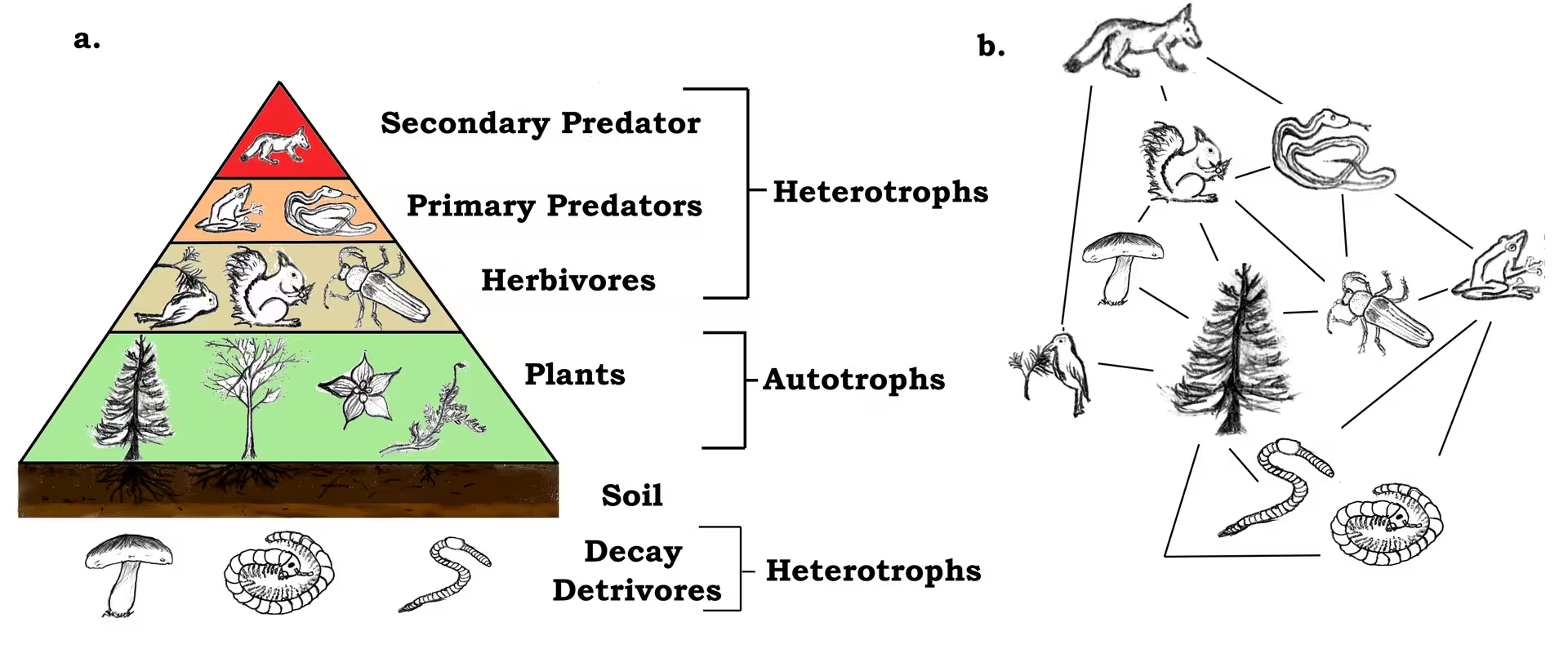
A trophic pyramid (a) and a food-web (b) illustrating ecological relationships among creatures that are typical of a northern boreal terrestrial ecosystem. The trophic pyramid roughly represents the biomass (usually measured as total dry-weight) at each level. Plants generally have the greatest biomass. Names of trophic categories are shown to the right of the pyramid. Some ecosystems, such as many wetlands, do not organize as a strict pyramid, because aquatic plants are not as productive as long-lived terrestrial plants such as trees. Ecological trophic pyramids are typically one of three kinds: 1) pyramid of numbers, 2) pyramid of biomass, or 3) pyramid of energy.
The totality or pattern of relationships of components of a system with their environment and with each other.

Biodiversity of a coral reef. Corals adapt to and modify their environment by forming calcium carbonate skeletons. This provides growing conditions for future generations and forms a habitat for many other species.