Sanakirja
Tekoälykääntäjä



| Kieli | Käännökset |
|---|---|
| bulgaria | тайфу́н |
| espanja | tifón |
| esperanto | tajfuno |
| hollanti | tyfoon, taifoen |
| italia | tifone |
| japani | 台風 (taifū), 颱風 (taifū), たいふう (taifū) |
| kreikka | τυφώνας (tyfónas / tifónas / tufónas) |
| latina | typhonas |
| liettua | taifūnas |
| norja | tyfon |
| portugali | tufão |
| puola | tajfun |
| ranska | ouragan, typhon |
| ruotsi | tyfon |
| saksa | Taifun |
| suomi | taifuuni, rajumyrsky, hirmumyrsky, orkaani |
| tanska | tyfon |
| turkki | tayfun |
| tšekki | tajfun |
| unkari | tájfun |
| venäjä | тайфун (taifun) |
Määritelmät
Substantiivi
- A severe tropical cyclone; an intense, rotating storm.
- (in particular) A weather phenomenon in the northwestern Pacific that is precisely equivalent to a hurricane except for its geographical region, typically resulting in wind speeds of 64 knots (119 km/h) or above. Equivalent to a cyclone in the Indian Ocean and Indonesia and Australia.
Verbi
Taivutusmuodot
| Monikko | typhoons |
Luokat
A severe tropical cyclone; an intense, rotating storm.
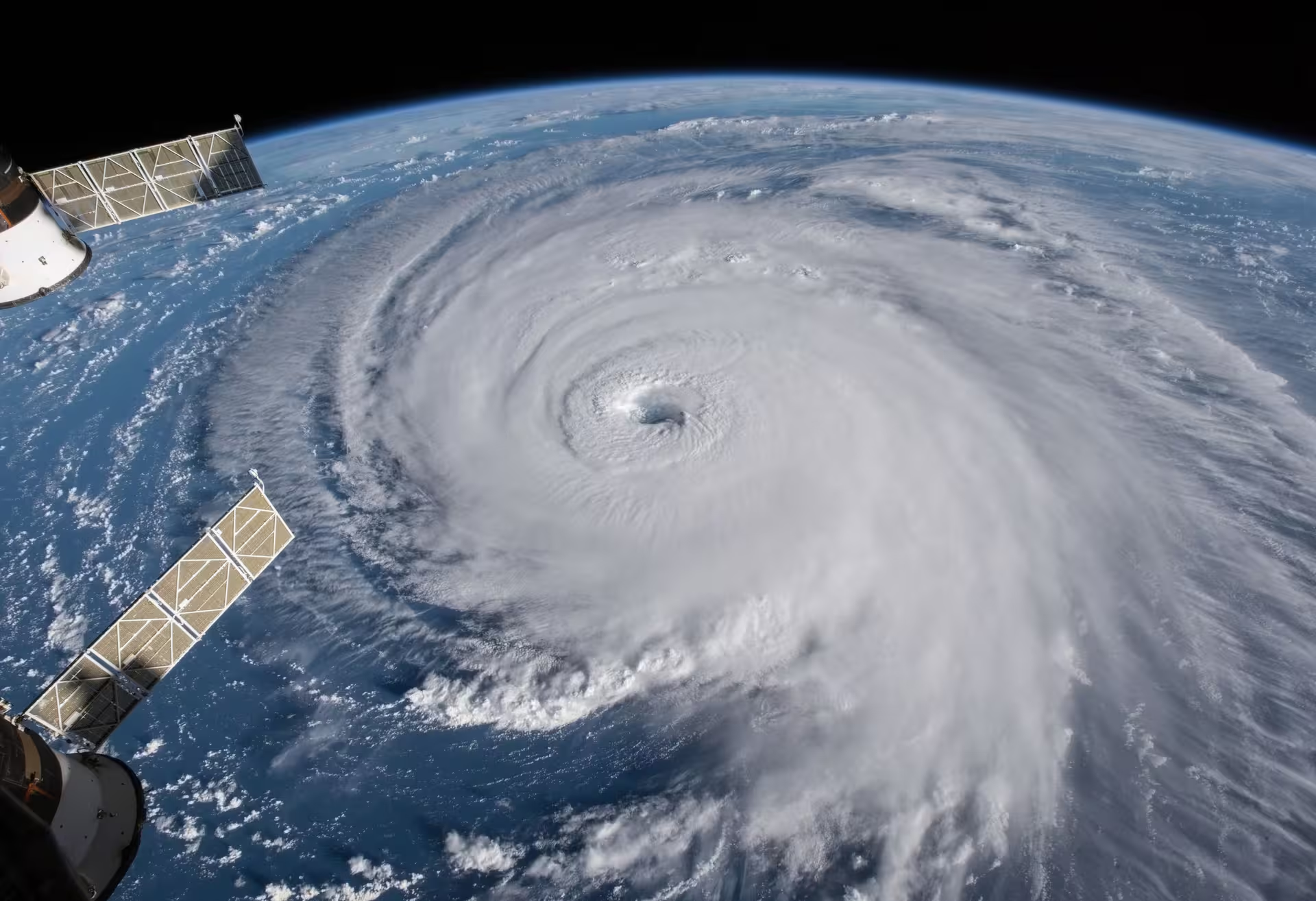
Hurricane Florence viewed from the International Space Station in 2018. The eye, eyewall, and surrounding rainbands are characteristics of tropical cyclones.
(in particular) A weather phenomenon in the northwestern Pacific that is precisely equivalent to a hurricane except for its geographical region, typically resulting in wind speeds of 64 knots (119 km/h) or above. Equivalent to a cyclone in the Indian Ocean and Indonesia and Australia.

Typhoon Noru over the Pacific Ocean
A severe tropical cyclone; an intense, rotating storm.

A diagram of a tropical cyclone in the Northern Hemisphere